
What Size Is a Glock Front Sight Screw and Tool?

Many gun owners assume a regular garage socket will easily remove a front sight, but standard tools are far too thick to fit. The real requirement is a 3/16-inch thin-wall nut driver, which is a specialized six-sided wrench slender enough to slip inside the slide (the moving top metal piece of the handgun). The factory screw itself has a head that matches that tool, with a standard thread length of about 0.16 inches on standard factory setups.
The right screw size changes if you swap out your original parts for taller target or suppressor sights. Taller sight posts need a longer screw, usually around 0.245 inches, to anchor securely into the metal base without stripping the threads. Picking the wrong length can leave the sight loose or cause the screw to drag against your barrel. Here is how to confirm your exact measurements and install the screw cleanly.
A 3/16-Inch Thin Socket Fits Glock Front Sight Screws
Every standard factory Glock front sight screw uses a 3/16-inch hex head. That means you need a tool with a 3/16-inch six-sided socket to turn it. The threads on the screw post itself are standard #8-32 machine threads. The screw slides in from the inside of the slide (the top metal part of the pistol that moves when firing) and threads directly into the bottom of your front sight blade.
A front sight screw is remarkably small, measuring only slightly larger than a grain of rice. Because the hex head is tiny and shallow, exact tool sizing is mandatory. If you try to use an approximate metric tool, such as a 5-millimeter wrench, you will quickly round off the edges of the fastener. Once those sharp corners round off, the socket slips and the screw becomes stuck in the slide.
Do not confuse front iron sight screws with optic slide screws. Handguns cut for miniature red dot sights, such as factory MOS models, use separate mounting fasteners on top of the slide. Those optic cutouts use fine fasteners such as #6-32 or metric M3 screws to anchor optics or adapter plates. Front iron sight screws are completely different parts with different thread pitches and hex heads, so never attempt to interchange them.
Knowing both the hex size and thread size helps you avoid common repair delays. When buying replacement screws, look for #8-32 thread specifications. When buying a wrench to install or remove the sight, look specifically for a 3/16-inch hex profile. Keeping those two numbers straight ensures you get the right parts on your workbench before taking your slide apart.
Pick Screw Length Based on Your Front Sight Height
Replacement front sight screws for Glock pistols come in two common lengths. The short version measures 0.16 inches long, while the long version measures 0.245 inches long. Both use the identical #8-32 thread pitch and the exact same 3/16-inch hex head, but the extra shaft length on the long version serves a specific purpose.
Standard factory sights, whether made of polymer or steel, require the short 0.16-inch screw. Standard-height night sights with tritium lamps or fiber-optic rods also rely on the short screw. In these sights, the oval mounting post on the bottom of the sight blade has shallow internal threads. A short screw draws the sight down flush against the top of the slide without bottoming out.
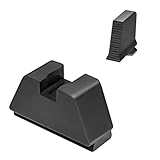
Long 0.245-inch screws are built for taller aftermarket iron sights. If you run a sound suppressor or an open-window reflex red dot on your pistol, you likely use taller sights. Taller setups, such as the best iron sights for cowitness with red dot sights in 2026, feature higher blades with deeper mounting pockets. The extra threads on a 0.245-inch screw give taller sights the gripping strength needed to withstand heavy slide cycling.
Using the wrong length creates immediate mechanical problems. If you put a long 0.245-inch screw into a standard shallow sight, the screw will bottom out against the end of the threaded hole before clamping the sight tight. The sight will rattle loosely on top of the slide, and the screw head may stick out far enough inside the slide to rub against the barrel. Conversely, if you put a short 0.16-inch screw into a deep aftermarket sight, only one or two threads will catch. Under recoil, those few threads can rip out, sending your sight flying off the pistol.
Use this quick checklist to pick the right screw length before you start:
- Check your sight height: Standard low-profile factory sights and everyday night sights take the short 0.16-inch screw. Extra-tall suppressor-height sights take the long 0.245-inch screw.
- Inspect the bottom of your sight: Look at the threaded cavity under the sight post. If the hole is shallow, choose the short screw. If the cavity is deep, use the long screw.
- Check dry thread engagement: Thread the screw into the sight by hand while off the pistol. Count how many turns it takes to seat. If the screw seats with plenty of room, it matches your sight base.
- Confirm slide clearance: When you set the screw into the bare slide cutout, the head must sit completely flush inside the counterbore pocket so the barrel can slide over it without friction.
Standard Garage Sockets Are Too Thick for the Slide
The most common mistake pistol owners make is reaching into a household tool chest for a standard 3/16-inch socket. While the socket opening may be 3/16 inches across, the outer wall of a common garage socket is far too thick. It cannot squeeze into the tiny pocket milled into the underside of the slide.
Glock engineers placed the front sight mounting hole in an extremely narrow recess. Inside the front of the slide, the metal walls curve inward to guide the recoil spring assembly and support the barrel. The clearance around the front sight screw is only a fraction of a millimeter. A standard hardware store socket binds against the interior metal walls long before the hex opening reaches the screw head.
When you force a thick tool into that narrow space, two bad things happen. First, the socket wedges into the slide at an uneven angle. Turning a socket while tilted puts pressure on only one edge of the screw head, which can strip (ruining the screw head so the wrench slips) or shear the head completely off. Second, the hard steel of a garage socket can scrape and gouge the protective finish inside your slide channel.
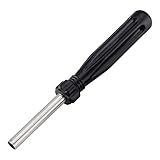
To turn the screw cleanly, you must use a dedicated thin-wall hex driver (a small six-sided nut wrench machined with extra-thin outer metal walls). These purpose-built armorer tools feature an ultra-slim barrel designed specifically to drop straight down into the Glock slide pocket. With a thin-wall tool, the socket slips fully over the screw head, allowing you to apply straight, balanced turning pressure without touching the slide walls.
Install the Screw Gently with Removable Threadlocker
Installing a Glock front sight requires patience, clean parts, and a gentle touch. Pistol slides accelerate and stop violently every time a shot is fired. Without the proper chemical locking fluid and steady alignment, vibration will work the screw loose within a couple of magazines at the range.
- Clear the pistol safely: Remove the magazine, pull the slide rearward, lock it open, and physically check the chamber with your finger to ensure no live ammunition is present. Move all ammunition to another room. Field strip the pistol by taking the slide off the frame and removing the barrel and recoil spring assembly.
- Clean the threads thoroughly: Factory oil, grease, or carbon fouling prevents screw-locking liquid from bonding to the steel. Dip a cotton swab in isopropyl alcohol and wipe clean the threads of the new screw and the inside of the sight post. Let both parts dry for two minutes.
- Apply medium threadlocker: Place one tiny drop of threadlocker (screw-locking liquid that stops parts from vibrating loose) onto the screw threads. Use a medium-strength, removable formula, which usually comes in a blue bottle or paste. Never use permanent red threadlocker, or you will need high heat from a mini-torch to remove the sight later.
- Seat the sight blade straight: Press the front sight post down into the oval cutout on the top of the slide. Look down the slide to make sure the blade sits perfectly straight and parallel with the slide edges. Hold the sight firmly in place with your thumb.
- Start the screw by hand: Drop the screw into the magnetic tip of your 3/16-inch thin-wall nut driver. Guide the tool into the slide pocket until the screw threads meet the sight post. Slowly turn the driver counter-clockwise until you feel a faint click, which signals the threads are aligned. Then turn clockwise by hand. Turning by hand first stops cross-threading, which can permanently ruin the sight base.
- Snug the screw down gently: Tighten the screw until it stops, then add just a slight fraction of a turn to snug it down. If you use an inch-pound torque tool, tighten between 3 and 5 inch-pounds. Never muscle this screw down with your whole hand. The tiny #8-32 screw will snap off inside the sight post if you over-tighten it.
- Check barrel clearance: Reinstall your barrel into the slide before the threadlocker cures. Manually slide the barrel forward and backward inside the slide. Look closely at the bottom of the barrel to confirm that the head of your front sight screw does not touch or drag against the barrel surface.
- Allow the liquid to cure: Set the slide aside on your bench for at least twenty-four hours. Threadlocker needs uninterrupted time to harden fully before you subject the firearm to recoil vibration.
Fix Loose Screws and Stripped Heads with Simple Fixes
If you notice your front sight leaning to one side or wobbling after a trip to the shooting range, stop shooting that handgun immediately. A loose front sight throws off your aim and risks tearing out the mounting threads during recoil. In most cases, a sight comes loose because no threadlocker was used, or because oil on the threads prevented the locking liquid from curing.
When a sight wiggles even though the screw feels completely tight, check the screw length. That symptom almost always means a long 0.245-inch screw was installed into a shallow sight base. The screw hit the end of the threaded hole before clamping the slide steel. To fix this, back the screw out, verify the depth of the sight pocket, and install a short 0.16-inch screw with fresh blue threadlocker.
Stripped screw heads present a trickier challenge. If someone previously used a thick socket or an incorrect wrench, the 3/16-inch hex corners may be rounded smooth. When your thin-wall tool spins freely without gripping, place a wide, flat rubber band across the tip of the tool. Press the tool firmly down into the screw head so the rubber fills the rounded gaps, then turn slowly. The added grip of the rubber often backs out a stubborn screw.
If hardened threadlocker holds a damaged screw tight, apply localized heat directly to the screw head. Touch the tip of a clean soldering iron to the screw head inside the slide for ten to fifteen seconds. The heat travels through the steel fastener and softens the threadlocker without harming the slide finish. Once heated, try the rubber band trick or a tiny reverse-twist screw extractor to back the fastener out.
Know when to set the tools down. If the screw head snaps completely off below the surface of the slide, or if the threads inside the sight blade strip out entirely, do not try to drill it out with a household hand drill. A wandering drill bit can gouge the slide mounting hole, ruining the alignment of any future sight you install. Take the stripped part to a qualified gunsmith or certified armorer, who can clamp the slide in a drill press and remove the broken shank cleanly.
Choose Dedicated Sight Tools and Quality Replacement Screws
Equipping your bench with the right sight hardware saves hours of frustration. When looking for replacement hardware, pick sets made from hardened steel rather than soft alloy metals. High-strength steel stands up to the snap of firearm recoil and resists rounding out when you apply torque with a wrench.
Buying screw multi-packs that bundle both short 0.16-inch and long 0.245-inch fasteners is a practical approach. Having both lengths on hand means you are covered whether you install low factory sights today or switch to tall suppressor-height night sights next year. Always check that the replacement screws feature standard #8-32 machine threads and a clean, sharp 3/16-inch hex profile.
For your tool kit, look for a dedicated thin-wall nut driver specifically labeled for Glock front sights. A good driver should feature a magnetized socket tip to hold the tiny screw securely while you guide it into the slide channel. Drivers with knurled round handles are ideal because they encourage turning with your fingertips, giving you the natural feel needed to avoid over-tightening the screw.
Before purchasing replacement hardware or tools, verify the wall thickness of the driver barrel and the steel grade of the screws. High-grade fasteners and a properly clearance-cut socket driver give you the exact fit required to service your handgun safely, keeping your front sight locked in place shot after shot.
- ARS Mark9.2
ARS Mark is a ranking system developed by bestairriflescopes.com. ARS Mark has no relationship or impact from any manufacturers or sales agent websites. Learn more
- BrandRaiseek

- ARS Mark9.0
ARS Mark is a ranking system developed by bestairriflescopes.com. ARS Mark has no relationship or impact from any manufacturers or sales agent websites. Learn more
- BrandXXTACMM

- ARS Mark9.0
ARS Mark is a ranking system developed by bestairriflescopes.com. ARS Mark has no relationship or impact from any manufacturers or sales agent websites. Learn more
- BrandXS Sight Systems

- ARS Mark8.8
ARS Mark is a ranking system developed by bestairriflescopes.com. ARS Mark has no relationship or impact from any manufacturers or sales agent websites. Learn more
- BrandTACBRO

- ARS Mark8.8
ARS Mark is a ranking system developed by bestairriflescopes.com. ARS Mark has no relationship or impact from any manufacturers or sales agent websites. Learn more
- BrandMonstrum

- ARS Mark8.6
ARS Mark is a ranking system developed by bestairriflescopes.com. ARS Mark has no relationship or impact from any manufacturers or sales agent websites. Learn more
- BrandTrijicon
- ARS Mark8.4
ARS Mark is a ranking system developed by bestairriflescopes.com. ARS Mark has no relationship or impact from any manufacturers or sales agent websites. Learn more
- BrandBrass hunter

- ARS Mark8.4
ARS Mark is a ranking system developed by bestairriflescopes.com. ARS Mark has no relationship or impact from any manufacturers or sales agent websites. Learn more
- BrandNvguoes
- ARS Mark8.4
ARS Mark is a ranking system developed by bestairriflescopes.com. ARS Mark has no relationship or impact from any manufacturers or sales agent websites. Learn more
- BrandNvguoes

- ARS Mark8.2
ARS Mark is a ranking system developed by bestairriflescopes.com. ARS Mark has no relationship or impact from any manufacturers or sales agent websites. Learn more
- BrandNvguoes
Last update on 2026-10-02 / Affiliate links / Images, Product Titles, and Product Highlights from Amazon Product Advertising API


12 Best 22 Pcp Air Rifle For Hunting of 2026 With Quiet Power

7 Best 22 Pcp Air Rifle Under 300 of 2026 For Backyard Pest Control

10 Best 22 Break Barrel Air Rifles of 2026 For Backyard Pest Control

10 Best 30 Caliber Pcp Air Rifle of 2026 For Medium Game

Top Best 177 Air Rifle Under 100: Budget-Friendly Picks for 2026

How to Safely Reload Shotgun Shells at Home

11 Best Co2 Air Rifle For Pest Control of 2026 To Ensure Humane Dispatch

12 Best Inexpensive Air Rifles of 2026 For Dependable Backyard Accuracy






