
What Size Peep Sight Should You Use for Hunting?

A shooter draws back on a deer at dusk, only to find that the tiny hole in the bowstring turns the entire scene pitch black. For all-around bowhunting, a 3/16-inch peep sight offers the ideal blend of brightness and accuracy, while a 1/4-inch opening works best for ground blinds and heavy woods.
The exact size for your bow comes down to how your setup fits together. A hunter with a longer draw holds the peep farther from the eye, which naturally makes the circle appear smaller. The front sight housing (the round ring that holds your aiming pins) also needs to fit cleanly inside the peep opening without crowding the edges. Here is how to match the right size to your bow so you never lose your target when legal shooting light fades.
Standard Hunting Peep Sizes and Why 3/16 Inch Leads the Pack
A peep sight acts as the rear sight for your compound bow. Just like aligning the front bead of a shotgun with a rear notch, your peep gives you a fixed point on the bowstring to look through every single time you draw back. When you walk into an archery shop, you will see three common peep opening sizes on the shelf: 1/8 inch, 3/16 inch, and 1/4 inch. While target archers have different priorities, bowhunters must choose a size that balances sharp aiming with raw light transmission.
A 1/8-inch peep sight is roughly the diameter of a thin coffee stirrer. It is a favorite among tournament shooters who stand in open fields under the midday sun. That tiny opening forces your eye into the exact center of the hole, creating extreme precision on foam targets at long distances. But in the woods, that tiny hole turns into a major problem. It acts like a blindfold the moment you step under a dense tree canopy or wait for game during the first minutes of the morning.
For most bowhunters, a 3/16-inch peep sight is the undisputed sweet spot. It measures about the width of a standard pencil eraser. This diameter allows plenty of natural light to reach your eye while remaining small enough to keep your sight picture tight and accurate. If you shoot white-tailed deer in open hardwoods, chase elk across mixed timber, or practice out to 50 or 60 yards, a 3/16-inch opening gives you the best balance between speed, light, and accuracy.
A 1/4-inch peep sight is roughly the size of a standard drinking straw. This large opening is built for difficult lighting conditions. If you hunt thick cedar swamps, heavily shaded river bottoms, or hunt inside an enclosed ground blind, a 1/4-inch peep is often your best choice. Ground blinds swallow daylight quickly, making it hard to see your pins even when legal shooting light remains outside. The wide opening lets in every bit of available light, ensuring that you can clearly see the animal and your pins when legal shooting light is fading fast.
How Light Levels and Target Visibility Change at Dawn and Dusk
Most big game animals move during twilight. In hunting, legal shooting hours typically begin thirty minutes before sunrise and end thirty minutes after sunset. These dim windows are when mature bucks and bulls feel safe enough to step into the open. Unfortunately, human eyes struggle in low light. As the sun dips below the horizon, your pupils dilate, opening wide to gather whatever ambient light is left in the woods.
If your peep opening size is too small, you restrict the light reaching your dilated pupil. Imagine looking at a bright room through a tiny pinhole in an index card. Everything appears noticeably darker than it does with your naked eye. In the timber, drawing back with a small 1/8-inch peep during prime time often means your target simply disappears. You might look past the bow and clearly see a deer standing thirty yards away, but the moment you anchor and look through the string, the forest floor looks like pitch black mud. You cannot see where the vital zone begins or ends, costing you a clean shot.
A larger peep opening fixes this issue by preserving ambient brightness. A 3/16-inch or 1/4-inch opening lets your eye gather background light from the woods around the deer. This contrast is critical. You need to see both the brightly glowing fiber-optic pin and the dark body of the animal behind it. When the peep is too small, the bright aiming pin creates a blinding halo effect in the dark hole, wiping out your view of the animal completely. A wider opening spreads that light out, keeping both your pins and the deer sharply visible.
The only trade-off with a larger opening is alignment discipline. When you have a wide 1/4-inch hole, your eye has room to wander if you get sloppy. If your eye drifts slightly to the left inside that big circle, your arrow will impact to the right. That is why 3/16 inch remains the favorite for hunters who want dependable low-light vision without risking alignment drift on longer shots across open fields.
How to Frame Your Sight Housing at Full Draw
Full draw means pulling the bowstring completely back to your anchor point against your jaw or the corner of your mouth. When you reach this position, your peep sight should sit directly in front of your aiming eye without forcing you to duck your neck or tilt your head. The secret to consistent shooting is not centering your individual aiming pins inside the peep. Instead, you want to frame the entire sight housing, which is the round outer ring holding the pins.
The human brain has a natural ability to recognize concentric circles, which are circles nested perfectly inside each other like a bullseye. When you look through a circular peep at a round sight housing, your brain instinctively centers the two rings without you having to overthink it. If you try to center an individual pin inside the peep, your anchor point changes every time you pick a different yardage pin. Centering the outer housing keeps your anchor locked in the exact same spot on every single shot. If you want to refine this technique, learning how to use a bow sight with better accuracy helps you lock in repeatable habits before opening day.
To verify that your peep diameter matches your sight housing, use this simple check in your yard or living room with your bow:
- Nock an arrow, point the bow at a safe target backstop, and close your eyes.
- Pull the bow back to full draw, settle firmly into your natural anchor point, and relax your grip.
- Open your shooting eye without moving your head or neck. The peep hole should align directly with your eye.
- Look at the circle of your sight housing through the peep. You should see a thin, perfectly even halo of daylight between the outer edge of your sight housing and the inner rim of your peep sight.
- Check the edges. If the peep cuts off the top pin, cuts off the bottom pin, or hides your bubble level at the bottom, your peep is too small or your sight is set too far away.
If you have too much empty space around the sight housing, or if the housing is getting cut off, you can often fix it without buying a new peep. Most modern bow sights feature an extension bar that slides forward and backward. Sliding the sight bar farther away from the bow riser makes the sight housing look smaller to your eye, helping it fit inside a smaller peep. Pulling the sight bar closer to the riser makes the housing look larger, filling up excess room inside a large 1/4-inch peep.
How Bow Geometry, Draw Length, and Setup Change Your Peep View
The diameter stamped on a peep sight package does not always tell the whole story. How that opening actually looks to your eye depends on your bow length, your draw length, and the physical angle of the bowstring at full draw. What works on a long target bow might fail completely on a compact hunting bow built for tree stands.
Bow length is measured from axle-to-axle, which is the bow length measured between the wheel axles at the ends of each limb. Modern hunting bows are often very compact, measuring between 28 and 31 inches from axle to axle. When you pull a short bow to full draw, the string forms a sharp, narrow triangle. A longer 34-inch bow creates a much wider, flatter string angle. This angle matters because the peep sight sits wedged between the strands of that angled string.
If you put a standard peep into a short bow with a steep string angle, the peep tilts forward. Looking through a tilted circle makes the hole appear like an oval, often called a cat-eye effect. This squishes your vertical sight window, cutting off your top and bottom pins. To keep the opening round, hunters shooting short bows need a peep with steeper string grooves, such as a 35-degree or 40-degree slot, rather than a standard target angle.
Your physical draw length also plays a major role. An archer with a 30-inch draw length holds the bowstring farther back, placing the peep sight very close to their eye. Just like holding a coin an inch from your face, proximity makes the hole appear huge. An archer with a 26-inch draw length holds the peep farther away from their face, making the same 3/16-inch hole appear noticeably smaller. If you have a short draw length, stepping up to a 1/4-inch peep often gives you the sight picture that a long-draw hunter gets from a 3/16-inch opening.
Where you hunt should also influence your choice. In elevated stands, overhead branches filter light, making it smart to pair your setup with the best bow sight for treestand hunting to gather every bit of daylight. Before heading into the season, run through this quick checklist to ensure your peep setup is hunting-ready:
- Tubeless design: Verify your peep does not rely on rubber tubing, which can dry rot, snap unexpectedly, or make loud buzzing noises when released.
- Straight rotation: Confirm the peep turns perfectly square to your eye when drawn slowly, without needing to twist the string with your fingers.
- Anti-glare protection: Ensure the inside of the peep has a matte finish or ribbed grooves to stop side sunlight from creating blinding glare.
- Full bubble visibility: Make sure you can see the leveling bubble at the bottom of your sight housing without changing your cheek pressure or head position.
Choosing the Right Bowhunting Peep Sight
Upgrading to a dedicated bowhunting peep sight solves the frustrating problems of low-light blur, string tilt, and sunlight glare. When choosing a peep sight, look for models machined from high-grade aluminum rather than molded plastic. Aluminum holds its shape under string tension, survives freezing winter temperatures without cracking, and provides clean, precise edges that do not distort your view.
Pay close attention to the string groove options. Premium hunting peeps offer dual string groove angles, allowing you to match the exact string pitch of your specific axle-to-axle bow length. Having the correct groove angle ensures that your peep opening stays completely round at full draw instead of turning into an oval. Smooth, convex string channels are another feature to look for, as rounded edges reduce friction and prevent premature wear on your bowstring fibers.
Glare reduction is equally important when hunting during bright afternoons. Look for peep sights that feature anti-glare light baffling, which are tiny internal ridges machined into the inner wall of the hole. These ridges block off-axis sunlight from bouncing into your eye, keeping your view crisp even when the sun is setting directly across your shooting lane. Some hunting models also offer interchangeable aperture inserts or hooded tops, giving you the flexibility to swap sizes between summer practice and cold hunting mornings while shielding the opening from rain and overhead glare.
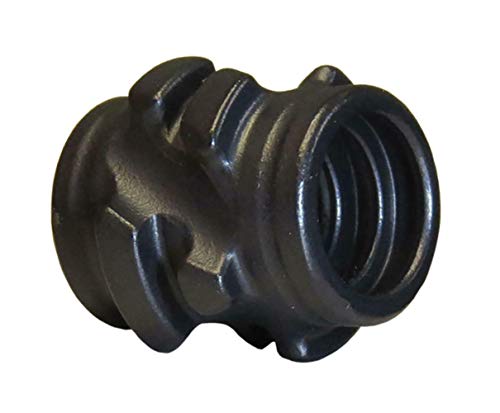
- ARS Mark9.6
ARS Mark is a ranking system developed by bestairriflescopes.com. ARS Mark has no relationship or impact from any manufacturers or sales agent websites. Learn more
- BrandHamskea

- ARS Mark9.6
ARS Mark is a ranking system developed by bestairriflescopes.com. ARS Mark has no relationship or impact from any manufacturers or sales agent websites. Learn more
- BrandHamskea

- ARS Mark9.4
ARS Mark is a ranking system developed by bestairriflescopes.com. ARS Mark has no relationship or impact from any manufacturers or sales agent websites. Learn more
- BrandG5 Outdoors
- ARS Mark9.4
ARS Mark is a ranking system developed by bestairriflescopes.com. ARS Mark has no relationship or impact from any manufacturers or sales agent websites. Learn more
- BrandG5 Outdoors

- ARS Mark9.4
ARS Mark is a ranking system developed by bestairriflescopes.com. ARS Mark has no relationship or impact from any manufacturers or sales agent websites. Learn more
- BrandG5 Outdoors

- ARS Mark9.0
ARS Mark is a ranking system developed by bestairriflescopes.com. ARS Mark has no relationship or impact from any manufacturers or sales agent websites. Learn more
- BrandRuiwaer

- ARS Mark8.8
ARS Mark is a ranking system developed by bestairriflescopes.com. ARS Mark has no relationship or impact from any manufacturers or sales agent websites. Learn more
- BrandTRUGLO

- ARS Mark8.6
ARS Mark is a ranking system developed by bestairriflescopes.com. ARS Mark has no relationship or impact from any manufacturers or sales agent websites. Learn more
- BrandSOPOGER

- ARS Mark8.2
ARS Mark is a ranking system developed by bestairriflescopes.com. ARS Mark has no relationship or impact from any manufacturers or sales agent websites. Learn more
- Brand- QI HUO JU -
Last update on 2026-10-02 / Affiliate links / Images, Product Titles, and Product Highlights from Amazon Product Advertising API
FAQs
Can a peep sight be too big for bowhunting?
Yes, a peep sight can be too large if it leaves a wide gap of empty space around your sight housing. When the opening is excessively large, your eye can float off-center inside the hole, causing your arrows to impact unpredictably left or right. A proper fit should leave only a thin, concentric halo of daylight around the outer ring of your sight housing.
Why does my peep sight look like an oval instead of a circle at full draw?
Your peep looks like an oval when the string groove angle does not match the angle of your bowstring at full draw. Short compound bows create sharp string angles that tilt standard peep sights forward, squishing the round opening into a narrow slot. Choosing a peep sight with matching 35-degree or 40-degree string grooves restores a true round circle.
Should I choose a tubeless peep sight or one with rubber tubing?
Tubeless peep sights are far superior and more reliable for bowhunting than models using rubber alignment tubing. Rubber tubing can dry rot, stretch out, produce an audible snap on release that spooks game, and even break mid-draw to cause facial injuries. A high-quality tubeless peep installed into a properly stretched bowstring will rotate straight every time without extra noise or moving parts.


12 Best 22 Pcp Air Rifle For Hunting of 2026 With Quiet Power

7 Best 22 Pcp Air Rifle Under 300 of 2026 For Backyard Pest Control

10 Best 22 Break Barrel Air Rifles of 2026 For Backyard Pest Control

10 Best 30 Caliber Pcp Air Rifle of 2026 For Medium Game

Top Best 177 Air Rifle Under 100: Budget-Friendly Picks for 2026

How to Safely Reload Shotgun Shells at Home

11 Best Co2 Air Rifle For Pest Control of 2026 To Ensure Humane Dispatch

12 Best Inexpensive Air Rifles of 2026 For Dependable Backyard Accuracy






