
What to Look for in a Crossbow Scope That Holds Zero

Most hunters assume an old rifle scope sitting in the garage will work fine on a crossbow rail. That shortcut usually fails because a crossbow snaps forward and backward with a violent two-way shock wave that shakes standard rifle glass apart. To keep your aim true, focus on a dedicated crossbow-rated optic built to handle that unique recoil, paired with a speed-calibrated drop reticle that matches arrow flight and gives you at least three inches of safe eye clearance.
The right choice still hinges on your specific setup. Arrow speed matters first, since your bow speed in feet per second dictates how closely those built-in aiming marks line up with arrow drop. Early morning and late evening hunts call for fully coated lenses to gather dim timber light, while your usual shooting distance inside sixty yards determines how much magnification you actually need. Here is how to spot the features that keep your arrows on target.
Why Crossbow Recoil Shatters Standard Rifle Scopes
A rifle pushes straight back against your shoulder when gun powder explodes in the chamber. The internal glass lenses and adjustment springs inside a standard rifle scope are built to brace against that single backward push. A crossbow behaves differently. When you squeeze the trigger, the heavy limbs spring forward with tremendous force, sending the string down the rail. When the string reaches full extension, the limbs snap to a sudden, violent halt. This creates a sharp forward whiplash shock wave that travels straight into your optic.
Standard rifle scopes are not reinforced to handle that forward jerk. The delicate internal tube holding the reticle can shift forward against its retaining springs. Within a few dozen shots, the crosshairs can twist, the internal seal can fail, or the reticle can shake loose. You might think your shooting form is off when your arrows start drifting wide, but the real issue is a broken internal erector system.
A dry fire (firing the bow without an arrow nocked) can shatter limbs and ruin almost any optic instantly. Even routine shooting with heavy hunting arrows delivers enough two-way vibration to loosen standard firearm glass. A dedicated crossbow scope uses heavier internal lock rings, reinforced erector springs, and shock-resistant housings built specifically to handle this forward snap.
How Drop Reticles and Speed Rings Match Arrow Flight
Crossbow arrows do not fly flat like high-speed rifle bullets. Even the fastest modern bows launch arrows on an arcing trajectory that drops rapidly past thirty yards. If you mount a basic single-crosshair rifle scope, you must guess how high to hold over the target at different distances. That guessing game leads to missed targets and wounded game.
A dedicated optic solves this problem by using a BDC reticle (aiming marks for set yardages). Instead of a single crosshair, the sight picture features multiple horizontal drop lines or glowing dots stacked vertically down the lens. The top marker typically represents your 20-yard zero, while the lower markers represent 30, 40, 50, and 60 yards.
Matching those aiming marks to your bow depends on your arrow speed. This is measured in FPS (arrow speed in feet per second). Faster arrows fly on a flatter path, so their aiming marks sit closer together. Slower arrows drop faster, requiring wider spacing between the marks. Many dedicated optics feature a speed-calibrated dial on the magnification ring. Turning this dial adjusts the magnification, which physically alters the visual spacing between the drop markers in your view.
If your bow shoots 380 FPS, you turn the dial to 380. The scope aligns the drop lines with your arrow flight, allowing every yardage mark out to 60 yards to hit dead-on. If your optic has fixed aiming lines without a speed dial, you must spend range time charting where each line hits. You might find that your second line hits at 28 yards and your third at 37 yards. A speed-calibrated optic eliminates that confusion.
Glass Quality and Reticle Illumination in Dim Timber
Most deer hunting happens during the first hour of legal light in the morning and the final thirty minutes before dark. Dense tree canopy, overcast skies, and dark ground blinds make target identification difficult during these prime windows. If your optic has cheap glass, the view through the eyepiece will look dark and blurry just when an animal steps into range.
Start by checking the objective lens (the front glass that gathers light). Crossbow scopes typically feature objective lenses between 32 millimeters and 40 millimeters. A 32-millimeter front lens keeps the bow compact, while a 40-millimeter lens draws in extra ambient light for better clarity at dusk. Optical coatings make an even bigger difference. Look for lenses labeled as fully multi-coated, meaning multiple anti-reflective layers cover every glass surface. These coatings maximize light transmission, cut down on glare, and sharpen contrast against dark backgrounds.
Reticle illumination is equally valuable in low light. Standard black wire crosshairs easily blend into dark deer hide or thick timber at twilight. An illuminated reticle lights up the center dots or yardage lines in red or green. Red light preserves your natural night vision in deep dusk, while green provides sharp contrast in shadowy woods. Look for an illumination dial with multiple brightness settings. If the light is too bright, the glow will flare inside the tube and obscure the animal. You want a soft, crisp glow that outlines your aiming point cleanly. Also, verify your local state wildlife agency regulations, as some areas restrict battery-powered illuminated sights during archery seasons.
Eye Relief and Mounting Dimensions for Shooter Safety
Crossbow stocks are often shorter and more compact than traditional rifle stocks, which changes how your face rests against the comb. This makes eye relief (the safe space between eye and lens) a primary safety and comfort factor.
Look for a scope that provides between three and four inches of eye relief. If eye relief is too short, such as under 2.5 inches, you must push your face awkwardly far forward to see a full sight picture. When shooting down from an elevated tree stand or aiming at an odd angle inside a blind, short eye relief brings your brow dangerously close to the rear housing during release. Generous eye relief provides a forgiving sight window, letting you find the target quickly with both eyes open.
The main body tube diameter also affects mounting and strength. Most crossbow scopes come with either a 1-inch tube or a 30-millimeter tube. A 1-inch tube is lightweight and keeps the bow streamlined. A 30-millimeter tube offers a thicker aluminum wall that resists bow vibration better. It also allows a wider range for your up-and-down adjustment (elevation) and side-to-side knob (windage). Make sure your mounting rings match your tube diameter, and verify that the ring height lets your cheek rest naturally against the stock.
Five Checks to Make Before Choosing Your Crossbow Scope
- Check that the optic is explicitly rated for crossbow shock. Standard firearm scopes are reinforced against rearward recoil rather than forward limb whiplash, so buying an optic without dedicated forward-shock protection will cause the internal erector springs to drift and lose zero within dozens of shots.
- Match the scope's speed calibration ring to your bow's measured arrow speed. Speed rings only function accurately within their listed velocity limits, so if your bow shoots 400 FPS but the scope dial stops at 360 FPS, the drop markers will not align with your arrow's actual trajectory.
- Verify that the eye relief measures at least three full inches. Generous clearance between your eye and the rear lens prevents painful brow contact and eliminates dark outer shadows around the sight picture when shooting from steep tree stand angles or cramped ground blinds.
- Inspect the reticle illumination across multiple dim brightness levels. A glowing reticle needs to provide subtle contrast against dark deer hide without washing out your field of view or flaring inside the tube during early dawn and late dusk.
- Confirm that the tube diameter and ring height match your crossbow rail. Crossbow mounting rails often sit higher or lower than rifle receivers, so verifying that 1-inch or 30-millimeter rings align the scope comfortably with your natural cheek weld prevents neck strain and canting errors.
Optic Designs That Solve Trajectory and Shock Problems
When upgrading from a blurry stock sight or outfitting a bare bow, choosing a purpose-built hunting optic eliminates the trial and error of guessing arrow drop. Dedicated crossbow optics are engineered with stout aluminum housings and heavy-duty internal erector tubes that absorb harsh limb vibrations shot after shot. They feature compact lengths, balanced weight profiles, and magnification ranges tuned specifically for hunting distances between 20 and 60 yards.
Before purchasing any upgrade, inspect the mounting hardware and verify your bow's real-world shooting speed with your hunting arrow weight. Upgrading to a properly fitted optic setup, such as pairing modern crossbows designed for hunting with a calibrated optic, ensures your horizontal markers track true out to your maximum ethical range. Checking these mechanical and optical details beforehand gives you complete confidence that your crosshairs will hold their zero in the field. If you are comparing pre-configured setups, looking into a complete crossbow package with optic can give you a baseline for how factory-matched scopes sit on the rail.
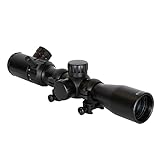
- ARS Mark8.6
ARS Mark is a ranking system developed by bestairriflescopes.com. ARS Mark has no relationship or impact from any manufacturers or sales agent websites. Learn more
- BrandMonstrum
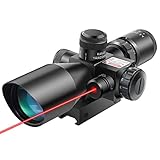
- ARS Mark8.0
ARS Mark is a ranking system developed by bestairriflescopes.com. ARS Mark has no relationship or impact from any manufacturers or sales agent websites. Learn more
- BrandBeileshi

- ARS Mark8.0
ARS Mark is a ranking system developed by bestairriflescopes.com. ARS Mark has no relationship or impact from any manufacturers or sales agent websites. Learn more
- BrandEastern Tactical Supply
Last update on 2026-10-18 / Affiliate links / Images, Product Titles, and Product Highlights from Amazon Product Advertising API
FAQs
Can I use an old rifle scope on my crossbow?
You can physically mount one if the rings fit the rail, but it will likely fail over time. Rifle scopes are built to absorb rearward recoil, whereas a crossbow produces a sharp forward whip when the limbs snap forward. This forward shock wave loosens rifle erector springs, causing the optic to lose zero or break internal seals.
What magnification is best for shooting under 50 yards?
Low to moderate magnification between 1.5x and 5x is ideal for hunting inside 50 yards. High magnification narrows your field of view, making it harder to track game in thick brush and slowing down your target acquisition. A lower magnification setting provides a wide, bright sight picture and keeps your view steady when aiming offhand.
Do I really need an illuminated reticle for deer hunting?
An illuminated reticle is not strictly required, but it offers a massive advantage during dawn and dusk. Standard black reticle lines blend into dark shadows and the hides of game animals during low-light hours. A soft red or green glowing aiming point lets you place your shot precisely without losing track of your crosshair.
How do I know if my scope rings are mounted at the correct height?
Your scope height is correct when you can shoulder the bow with your eyes closed, open your dominant shooting eye, and see an immediate, clear sight picture without adjusting your head. If you have to lift your cheek off the stock, the rings are too high. If you must mash your face down into the comb to center the image, the rings are too low.


12 Best 22 Pcp Air Rifle For Hunting of 2026 With Quiet Power

7 Best 22 Pcp Air Rifle Under 300 of 2026 For Backyard Pest Control

10 Best 22 Break Barrel Air Rifles of 2026 For Backyard Pest Control

10 Best 30 Caliber Pcp Air Rifle of 2026 For Medium Game
Top Best 177 Air Rifle Under 100: Budget-Friendly Picks for 2026

How to Safely Reload Shotgun Shells at Home

11 Best Co2 Air Rifle For Pest Control of 2026 To Ensure Humane Dispatch

12 Best Inexpensive Air Rifles of 2026 For Dependable Backyard Accuracy






