
When Was the First Bolt Action Rifle Made?

The first working model appeared in 1836. A German inventor named Johann Nikolaus von Dreyse built the Dreyse needle gun, using a sliding metal bolt to push ammunition directly into the breech, the back opening of the barrel. His breakthrough let soldiers reload safely while lying flat instead of standing up in the open to pour powder down a muzzle.
Pinning down an exact date depends on what counts as the true starting line. Dreyse built early experimental prototypes as far back as 1824 before finishing his famous 1836 breech-loading design. Other historians look to the late 1800s, when rifles switched to all-metal cartridges and internal magazines. That reliable mechanism even carried over into modern pellet guns. Here is how the design evolved and why it changed shooting forever.
The 1836 Milestone and Johann Nikolaus von Dreyse
If you search old patent records and military books, you will see a few different dates for the birth of the bolt action rifle. Some sources say 1824, others say 1836, and many military history books point to 1841. That spread creates plenty of confusion, but the timeline becomes simple once you look at what was actually built in each year.
A German gunsmith named Johann Nikolaus von Dreyse spent years trying to make firearms reload faster. In 1824, working in the town of Sommerda, Dreyse built an experimental muzzleloader. You still had to pour gunpowder and ram a lead ball down the front opening of the barrel, but his design used a thin steel pin to strike an internal primer. It was an important step forward, but it was not a bolt action.
The true turning point arrived in 1836. Dreyse completed a working breech-loading rifle that used a cylindrical sliding bolt. A bolt is a sliding metal cylinder and handle that chambers the round and seals the back opening of the barrel. Instead of loading from the muzzle, the shooter could pull back a handle, drop a complete round into the back of the barrel, push the handle forward, and lock it down. That 1836 firearm was the first working bolt action rifle in history.
The 1841 date comes from military adoption. The Prussian army evaluated Dreyse's design in absolute secrecy. King Frederick William IV was so impressed by how fast soldiers could shoot that he ordered 60,000 rifles in 1841. Prussia called it the needle gun, or Leichtes Perkussionsgewehr M/41, and kept the bolt mechanism hidden from rival nations for nearly a decade. So while 1841 is the year the rifle joined an army, 1836 is the year the first practical bolt action rifle was made.
How the First Bolt Action Worked Compared to Older Muskets
To understand why the bolt action changed firearm history, look at how soldiers had to fight before 1836. Standard infantry carried muzzle-loading muskets. Loading a musket was a slow, awkward chore that involved ten or twelve separate motions. A shooter had to stand upright in the open, tear open a paper powder packet with their teeth, pour powder down the muzzle, draw a metal ramrod, pound the round lead ball all the way down the barrel, return the ramrod to its slot, and place a tiny percussion cap on a nipple near the hammer.
A trained soldier under fire could manage two or three shots per minute with a musket. Standing upright to work the ramrod made every infantryman an easy target across open fields. Dropping a ramrod in the mud left the soldier completely defenseless.
Dreyse eliminated the ramrod by opening the breech, which is the back opening of the barrel where you load ammunition. He combined the lead bullet, the black powder charge, and the primer pellet into a single, self-contained paper cartridge. The primer pellet sat directly against the base of the bullet, buried deep inside the powder charge.
Operating the needle gun was straightforward. The shooter lifted the bolt handle, drew the bolt cylinder back, dropped the paper cartridge into the open breech, pushed the bolt forward, and turned the handle down into a locked notch. When the shooter pulled the trigger, a long, spring-driven steel firing pin drove through the paper casing and punched through the gunpowder to hit the primer at the front. The rifle could fire five to seven aimed shots per minute, more than double the speed of any muzzleloader.
The biggest tactical gain was soldier safety. For the first time, an infantry squad could reload while lying flat on their stomachs in tall grass or crouched behind a stone wall. That single advantage helped Prussia dominate European battlefields during the 1860s.
The Shift to Metal Cartridges and Repeating Magazines
Dreyse proved that the bolt concept worked, but his early paper cartridge had real flaws. The paper casing did not form a perfect seal against the steel barrel walls. Hot gas leaked backward around the bolt face during every shot, which could burn a shooter's face if the rifle was worn out. The long steel needle also stayed surrounded by burning gunpowder, causing the pin to turn brittle and snap after repeated firing.
During the late 1860s and 1870s, gunmakers solved the gas leak by switching to metallic cartridges. A metallic cartridge uses a brass case that expands outward under firing pressure, gripping the steel walls of the breech to create a complete gas seal. Once the bullet leaves the muzzle, the brass case contracts slightly so the bolt can pull it free.
In 1871, brothers Peter Paul Mauser and Wilhelm Mauser introduced the Mauser Model 1871. This single-shot rifle used a robust steel turn-bolt designed specifically for metallic brass cartridges. It eliminated the gas leaks that plagued the Dreyse and set a new standard for bolt strength.
The next major step arrived in the 1880s with the addition of internal box magazines. Early bolt action rifles were single-shot arms, meaning you fed one round at a time with your fingers. Repeating magazines allowed shooters to load five or more cartridges at once from a metal clip. Drawing the bolt backward pulled out the spent brass casing, and pushing the bolt forward stripped a fresh cartridge straight off the top of the magazine spring and chambered it into the barrel.
By 1898, Paul Mauser released the Mauser 98. It featured two massive locking lugs at the front of the bolt, a third safety lug at the rear, a controlled-round claw extractor, and vents to direct escaping gas away from the shooter's eyes. That 1898 design became the foundation for almost every modern bolt action hunting rifle and target rifle used across the world today.
Why Airguns and Pellet Rifles Still Use Bolt Actions Today
You might wonder why a 19th-century firearm mechanism remains so common on modern airguns. Air rifles do not burn powder or create thousands of pounds of explosive gas pressure, but the bolt action remains one of the simplest and most dependable ways to load a pellet.
The bolt on an air rifle acts as a loading probe. Instead of hitting a primer with a needle, the bolt face pushes a lead or alloy pellet out of a feed tray or a multi-shot revolving pellet wheel and seats it smoothly into the rifling at the back of the barrel. Lead or alloy pellets are shaped, aerodynamic projectiles designed for rifled barrels, used widely for target shooting, backyard plinking, and small-game pest control. The bolt probe makes sure the soft skirt of the pellet seats at the exact same depth inside the barrel for every single shot.
Bolt actions are especially popular on PCP rifles. A PCP (pre-charged pneumatic) airgun runs on compressed air stored in an onboard tank, filled from a special hand pump, high-pressure compressor, or scuba tank. Because the air is already stored in the cylinder, working the action requires very little physical effort. You only need to flick the bolt handle up, draw it back to cock a light internal hammer spring and turn the magazine clip, then slide it forward to seat the pellet.
Compare that to standard break-barrel guns, which are rifles cocked by pivoting the barrel down to compress an internal spring or gas piston. A break-barrel requires twenty to forty pounds of cocking effort to swing the heavy barrel downward for every individual shot. Over thousands of rounds, the hinge pin on a break-barrel can develop slight play, which alters the sight alignment between the barrel and the scope.
A bolt action airgun avoids that problem because the barrel stays fixed rigidly inside the stock. The scope and the barrel never move independently of each other. That rock-solid mounting gives shooters consistent precision, making bolt action airguns a top pick for benchrest competition and humane backyard pest control.
Six Checks for Operating a Bolt Action Air Rifle Safely
Operating a bolt action air rifle is simple, but soft lead ammunition and high-pressure seals require clean handling habits. Work through these checks in order every time you prepare to shoot.
- Point the muzzle toward a safe target backstop and engage the safety catch. A rated steel pellet trap, dense rubber mulch box, or thick backstop berm prevents dangerous ricochets if your fingers bump the trigger while working the mechanism.
- Rotate the bolt handle fully upward before pulling backward. The locking lug must clear its receiver channel completely, because pulling backward while the handle is half-turned binds the metal guide rods and scratches the bolt finish.
- Pull the bolt handle straight back until the hammer clicks into place. The bolt must travel all the way to the rear stop to catch the internal trigger sear, or the rifle will fail to stay cocked when you push the bolt closed.
- Inspect the open breech to confirm the chamber is clear. Checking the loading port visually stops you from feeding a second pellet behind a stuck projectile, which can jam the barrel and damage the internal rifling.
- Push the bolt forward with steady, gentle thumb pressure. Smooth movement allows the loading probe to seat the pellet straight into the rifled lead-in without denting or squashing the thin lead skirt.
- Turn the bolt handle all the way down into its locked position. A fully closed bolt locks the internal rubber O-ring against the barrel face, preventing high-pressure air from venting backward into your face when you pull the trigger.
Choosing the Right Bolt Action Airgun for Your Needs
If you enjoy the classic feel of cycling a bolt between shots, several airgun styles fit different goals and budgets. Knowing what to inspect before you buy will help you pick an action that matches your backyard layout and shooting habits.
Start by considering the air system. Pre-charged pneumatic rifles offer the smoothest bolt cycle and virtually zero firing recoil, but they require supporting gear like a high-pressure hand pump or filling tank. Rifles powered by disposable gas cartridges offer a similar lightweight bolt feel at a lower entry price, though their power drops off during rapid firing or chilly weather. Multi-pump pneumatics, which are rifles powered by 3 to 10 forearm hand pumps, offer variable power per shot but require extra physical pumping between bolt cycles.
Pay close attention to ammunition design. Rifled barrels are built strictly for lead or alloy pellets. Never feed steel BBs into a rifled pellet barrel. Steel BBs are smooth round balls for plinking in smoothbore guns; forcing hard steel balls down a rifled barrel quickly strips the delicate rifling grooves and destroys downrange accuracy. If casual target practice is your main goal, choosing a dedicated BB gun for backyard plinking keeps ammunition costs tiny while saving your rifled guns for tight groups.
Check the scope mounting rail and sound features. Look for narrow 11mm dovetail grooves or notched Picatinny and Weaver rails to mount your optic securely. If you shoot near neighbors, look for built-in noise baffles or muffled barrels that absorb air blast at the muzzle.
Finally, always practice safe storage. Keep pellets stored separately from your rifles, and secure your collection using a reliable lock or safe. Investing in a dependable gun safe lock keeps your airguns out of unauthorized hands when shooting sessions end.

- ARS Mark9.7
ARS Mark is a ranking system developed by bestairriflescopes.com. ARS Mark has no relationship or impact from any manufacturers or sales agent websites. Learn more
- BrandGamo

- ARS Mark8.9
ARS Mark is a ranking system developed by bestairriflescopes.com. ARS Mark has no relationship or impact from any manufacturers or sales agent websites. Learn more
- BrandUmarex

- ARS Mark8.5
ARS Mark is a ranking system developed by bestairriflescopes.com. ARS Mark has no relationship or impact from any manufacturers or sales agent websites. Learn more
- BrandDPMS
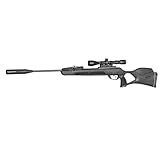
- ARS Mark8.4
ARS Mark is a ranking system developed by bestairriflescopes.com. ARS Mark has no relationship or impact from any manufacturers or sales agent websites. Learn more
- BrandGamo

- ARS Mark7.5
ARS Mark is a ranking system developed by bestairriflescopes.com. ARS Mark has no relationship or impact from any manufacturers or sales agent websites. Learn more
- BrandGamo
Last update on 2026-10-16 / Affiliate links / Images, Product Titles, and Product Highlights from Amazon Product Advertising API
FAQs
Did anyone make a bolt action before Johann Nikolaus von Dreyse in 1836?
No practical, self-contained bolt action rifle existed before Dreyse completed his breechloader in 1836. Earlier gunsmiths built experimental sliding breeches and separate needle-fire ignition systems in the 1820s, but Dreyse was the first person to combine a turning bolt handle, an internal firing pin, and a self-contained cartridge into a single working firearm.
What is the difference between a turn-bolt and a straight-pull bolt action?
A turn-bolt requires you to rotate the handle upward to unlock the mechanism before pulling it straight back to eject and cock the gun. A straight-pull bolt allows you to yank the handle directly backward in one motion. Internal helical cams inside a straight-pull bolt rotate the locking lugs automatically, which allows faster follow-up shots but adds mechanical complexity.
Can you dry fire a bolt action air rifle without hurting it?
It depends on the power system. Most PCP bolt action rifles can be dry fired occasionally without harm because the hammer strikes an air valve stem that cushions the blow. However, spring-piston or gas-piston airguns should never be dry fired because releasing the piston without air resistance from a pellet slams the piston head against the front of the compression tube, causing cracked seals and broken springs.
Why do many modern PCP air rifles use side levers instead of bolt handles?
Side-lever actions use a hinged mechanical linkage that provides better leverage than a direct bolt handle. That mechanical advantage makes cocking stiff hammer springs feel almost effortless. Side levers also allow shooters to cycle the action with a quick forward-and-back flick of the fingers without lifting their cheek away from the stock comb.


12 Best 22 Pcp Air Rifle For Hunting of 2026 With Quiet Power

7 Best 22 Pcp Air Rifle Under 300 of 2026 For Backyard Pest Control

10 Best 22 Break Barrel Air Rifles of 2026 For Backyard Pest Control

10 Best 30 Caliber Pcp Air Rifle of 2026 For Medium Game

Top Best 177 Air Rifle Under 100: Budget-Friendly Picks for 2026

How to Safely Reload Shotgun Shells at Home

11 Best Co2 Air Rifle For Pest Control of 2026 To Ensure Humane Dispatch

12 Best Inexpensive Air Rifles of 2026 For Dependable Backyard Accuracy






