
Is a Red or Green Dot Sight Better for You?

Check how clearly your eyes focus on lighted points in full daylight before buying any optic. Human eyes naturally process emerald shades much faster, making a green dot easier to pick up in bright sun, while a red dot provides far longer battery life.
Astigmatism (an uneven eye shape that turns round dots into blurry smears) often tilts the choice toward green because it tends to look cleaner and less distorted. Outdoor backdrops also matter. Red reticles (the lighted aiming dots) stand out sharply against lush grass and leafy woods where green can blend into the foliage. Battery life is the final hurdle, since green diodes drain power much faster and demand frequent cell changes. Comparing your vision, your typical surroundings, and your battery expectations makes the right pick obvious.
The Quick Choice: How Red and Green Compare for Human Vision
The choice between a red and green aiming dot comes down to how your eyes process light and where you shoot most. Human eyes do not see every color with equal sensitivity. Specialized photoreceptor cells in your eyes, known as cones, are naturally tuned to detect green light far more easily than red light during the day. Because of this natural biology, a green reticle (the lighted aiming dot inside the optic) appears brighter and sharper to your brain even when the internal light source runs at a moderate output.
When you step outside under midday sun, a red dot can easily wash out against sunlit ground. To keep a red dot visible against pale dirt, concrete, or light targets, you often have to turn the brightness dial all the way up. Dialing a red dot to full power can cause distracting light bloom, creating a fuzzy halo around the lens. A green reticle stands out in bright daylight at lower intensity settings, letting you acquire targets quickly without fighting glare.
Dot size also affects how quickly you notice either color. Dot size is measured in MOA, which stands for minutes of angle. MOA measures how much of the target the dot covers at a set distance. A fine 2 MOA dot covers about 2 inches of a target at 100 yards, or half an inch at 25 yards. This small size works well for precision shooting because it does not cover small bullseyes. In comparison, a larger 4 to 6 MOA dot covers 4 to 6 inches at 100 yards, which is faster to find under defensive stress. A fine 2 MOA green dot often looks just as prominent in bright sun as a larger red dot, giving you precision and speed together.
Red remains popular for clear reasons. In dim lighting, twilight, and dark indoor ranges, red light is gentle on your eyes. It preserves natural night vision without forcing your pupils to shrink. If you shoot mostly in low light or indoors, a red dot provides a steady, clean aiming point that will not overpower your view.
Battery Run Time and Power Demands
The biggest practical difference between red and green optics is how much electrical energy they draw from the battery. Inside every dot sight sits an emitter, which is the tiny LED that shines the dot onto the lens. Red LEDs require very little electrical current to produce a sharp aiming point. Green emitters demand significantly more electrical current to produce visible brightness. Because of this physical demand, a green optic drains its battery much faster than an identical red optic.
A dependable red dot left on a medium brightness setting can run continuously for tens of thousands of hours on a single coin-cell battery. For home defense or duty gear, this extended life offers peace of mind. You can leave the sight powered on for years in a safe and know it will work instantly. A green sight cannot match that continuous run time. If left on continuously at medium to high brightness, a green reticle can drain a battery within several months or weeks.
Cold weather accelerates this power loss. Freezing temperatures reduce chemical activity inside standard lithium coin batteries, cutting down their usable output. When a high-draw green emitter runs in freezing conditions, the battery life drops even faster. If you carry a green reticle in winter, replace the battery on a regular schedule instead of waiting for the aiming dot to die.
To balance this power drain, many modern optics include motion-sensing auto-on that turns the reticle on when moved and sleeps to preserve battery life. When the firearm rests untouched for a few minutes, the sight turns off the emitter. The moment you move the firearm, the sensor wakes the dot back up to your set brightness. Even with auto-sleep features, keeping extra coin batteries in your range bag or gun case is an essential habit with a green optic.
Astigmatism, Eye Shape, and Target Backgrounds
Many shooters start comparing reticle colors after discovering their red dot looks like an irregular smear, an uneven starburst, or a cluster of grapes rather than a crisp circle. This blur is almost always caused by astigmatism, which is an eye shape that turns dots into blurry smears. When your cornea or eye lens is shaped like an oval football rather than a round ball, incoming light cannot focus on a single point on your retina. The light scatters, creating an uneven flare around the dot.
Green reticles often look substantially sharper for shooters with astigmatism. Human eyes focus green light waves more cleanly toward the center of the retina, reducing optical flare. Many people who struggle with a flared starburst on a red dot report that a green dot appears rounder and easier to focus on.
Before assuming your optic is broken, you can run a simple verification check. First, make sure your firearm is completely safe by dropping the magazine and clearing the chamber. Confirm no ammunition is present. Turn on your optic and point it toward a plain wall. Look directly at the dot, then slowly rotate the optic in your hand 90 degrees while keeping your head still. If the starburst flare rotates with the optic body, the lens or emitter has an optical flaw. If the blur stays angled in the exact same direction while the optic turns, your eye shape causes the distortion.
Your shooting environment also dictates how well each color performs. An aiming dot must contrast cleanly against your background. Review this checklist to match the reticle color to your typical terrain and lighting:
- Summer brush, lawns, and deep woods: Choose red. A bright red reticle jumps out against green grass, leafy branches, and mossy tree trunks. A green dot can blend into thick summer foliage.
- Desert landscapes, dry plains, and sandy gravel: Choose green. Pale dirt, dry brush, and sun-baked sand wash out red dots. A vibrant green dot creates sharp contrast against tan backgrounds.
- Indoor home defense and painted drywall: Choose green or red. Green stands out clearly against white or neutral drywall and dark hallway corners. Red also works well, provided your walls are not red brick or dark wood paneling.
- Low-light conditions and night shooting: Choose red. Red preserves your natural night vision and keeps your pupils from contracting. A green dot set too high in the dark can cause distracting reflections on the glass.
What to Look for in a Dot Sight for Your Setup
When choosing an optic to solve reticle visibility and color issues, you have two primary options: dedicated single-color optics and dual-color switchable sights. Sights with switchable red and green reticles let you change colors using an external dial or button. These dual-color models work well if you shoot across mixed environments, such as hunting in leafy timber in the summer and shooting at sandy ranges in the fall. Dedicated green optics, by contrast, feature emitters engineered specifically for green light transmission, often offering better battery efficiency and sharper glass clarity than budget switchable designs.
The housing style also affects durability and sight picture. You will find two main styles: open-window sights and enclosed tube sights. Open-window sights feature a single exposed pane of glass, giving you a wide sight picture and fast target acquisition on handguns and light rifles. Enclosed tube sights protect the emitter (the tiny LED that shines the dot onto the lens) inside a sealed aluminum housing with glass on both ends. This design keeps out rain, snow, mud, and debris during rough field use.
Before purchasing, check that the mounting system matches your firearm. Most rifle optics mount directly to standard Picatinny or 20mm slotted accessory rails, while handgun optics require a slide cut or adapter plate matching the optic footprint (the specific screw-hole and recoil-lug pattern cut into a slide or adapter plate). Always clear the firearm chamber and remove all magazines before mounting. Secure the optic using an inch-pound torque tool and a dab of thread-locking fluid so firearm recoil does not shake the screws loose.
After mounting, zero the sight by adjusting the left-to-right and up-and-down adjustment click dials until your shots land exactly where the dot points at a set distance, like 25 yards for pistols or 50 yards for rifles. If you run backup sights on a rifle, see our guide on backup iron sights for cowitness with red dot sights to line up your iron sights through the optic glass. If you shoot a rimfire pistol, our guide on dedicated red dot sights for target pistols explains how dot size and optic balance work together for precision practice.
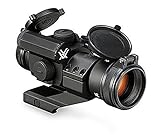
- ARS Mark9.4
ARS Mark is a ranking system developed by bestairriflescopes.com. ARS Mark has no relationship or impact from any manufacturers or sales agent websites. Learn more
- BrandVortex

- ARS Mark9.0
ARS Mark is a ranking system developed by bestairriflescopes.com. ARS Mark has no relationship or impact from any manufacturers or sales agent websites. Learn more
- BrandCVLIFE

- ARS Mark8.8
ARS Mark is a ranking system developed by bestairriflescopes.com. ARS Mark has no relationship or impact from any manufacturers or sales agent websites. Learn more
- BrandCVLIFE
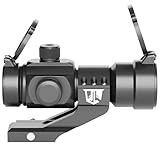
- ARS Mark8.8
ARS Mark is a ranking system developed by bestairriflescopes.com. ARS Mark has no relationship or impact from any manufacturers or sales agent websites. Learn more
- BrandOZARK ARMAMENT
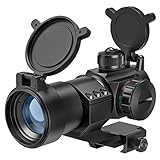
- ARS Mark8.8
ARS Mark is a ranking system developed by bestairriflescopes.com. ARS Mark has no relationship or impact from any manufacturers or sales agent websites. Learn more
- BrandCVLIFE
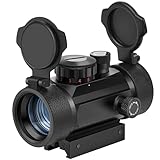
- ARS Mark8.6
ARS Mark is a ranking system developed by bestairriflescopes.com. ARS Mark has no relationship or impact from any manufacturers or sales agent websites. Learn more
- BrandEZshoot

- ARS Mark8.6
ARS Mark is a ranking system developed by bestairriflescopes.com. ARS Mark has no relationship or impact from any manufacturers or sales agent websites. Learn more
- BrandFeyachi

- ARS Mark7.8
ARS Mark is a ranking system developed by bestairriflescopes.com. ARS Mark has no relationship or impact from any manufacturers or sales agent websites. Learn more
- Brandohhunt
Last update on 2026-10-02 / Affiliate links / Images, Product Titles, and Product Highlights from Amazon Product Advertising API
FAQs
Why does a green dot look fuzzy or distorted to some shooters?
A green dot can look fuzzy if the brightness setting is turned up too high for the ambient light, which causes the reticle to flare across the glass. It can also appear distorted if you have uncorrected astigmatism, though green usually blooms less than red. Lowering the brightness click dial often sharpens the dot immediately.
Will a green aiming dot get lost when shooting in grass or woods?
A green reticle can blend in when aiming directly into dense, sunlit foliage, tall green grass, or thick leafy brush. Because the reticle and the backdrop share similar green wavelengths, your eyes may take longer to locate the dot. In heavy summer woods, a red dot provides faster visual contrast against green leaves.
Is a red dot or green dot better for home defense at night?
A red dot is generally better for nighttime home defense because red light is gentle on dark-adapted eyes and preserves natural night vision. A green dot can appear overwhelmingly bright in a dark room, creating distracting internal lens reflections and forcing your pupils to shrink. If you choose green for home defense, keep the brightness dial on a low setting.


12 Best 22 Pcp Air Rifle For Hunting of 2026 With Quiet Power

7 Best 22 Pcp Air Rifle Under 300 of 2026 For Backyard Pest Control

10 Best 22 Break Barrel Air Rifles of 2026 For Backyard Pest Control

10 Best 30 Caliber Pcp Air Rifle of 2026 For Medium Game

Top Best 177 Air Rifle Under 100: Budget-Friendly Picks for 2026

How to Safely Reload Shotgun Shells at Home

11 Best Co2 Air Rifle For Pest Control of 2026 To Ensure Humane Dispatch

12 Best Inexpensive Air Rifles of 2026 For Dependable Backyard Accuracy






