
Why Is Binocular Vision Important for Daily Life

Many people don’t realize just how much binocular vision influences their everyday experiences. From walking down the street to catching a ball, both eyes working together create a single, three-dimensional view of the world. This teamwork allows the brain to judge distance accurately, giving us the confidence to move quickly, react safely, and enjoy activities without hesitation. Without this coordination, even simple tasks can feel challenging and disorienting. The beauty of binocular vision lies in its ability to provide depth perception. That’s why drivers, athletes, or even someone pouring a glass of water rely on it constantly. Without it, objects appear flatter, and the brain struggles to measure how near or far something really is. Imagine trying to park a car or climb stairs without being sure of the distance—it’s frustrating and sometimes even risky. Another major perk of binocular vision is reducing eye strain. With both eyes aligned, the workload is shared evenly. That means less fatigue, fewer headaches, and more comfortable reading or screen time. For students, professionals, or gamers spending hours in front of books or digital devices, this balance can make a world of difference. Finally, binocular vision enhances clarity. Seeing with one eye limits the field of view and sharpness. But with both eyes blending images, details pop out and surroundings become brighter. This sharper perception supports not only safety but also the enjoyment of hobbies like birdwatching, photography, or even appreciating art. In short, binocular vision is a quiet powerhouse, shaping the way we connect with the world every single day.
Imagine trying to catch a ball with one eye closed—it’s awkward, isn’t it? That simple example explains why binocular vision is such a game-changer. It’s more than just seeing with two eyes; it’s about how the brain merges those views into one clear, three-dimensional picture. This fusion creates depth, balance, and precision in ways we often take for granted. Think about driving through traffic, stepping onto a crowded train, or threading a needle. All of these activities demand accurate distance judgment, smooth coordination, and steady focus. Without binocular vision, everyday tasks would feel clumsy, uncertain, or even unsafe. The ability to gauge space and depth isn’t a luxury—it’s a vital part of functioning with ease and confidence. Beyond practicality, binocular vision also protects our eyes from strain. Two eyes working together distribute the effort, keeping headaches and fatigue at bay. Whether you’re a student pouring over textbooks, a professional tackling endless spreadsheets, or a hobbyist glued to your favorite game, the comfort of balanced vision can’t be overstated. Put simply, binocular vision is the unsung hero that shapes how we see, move, and interact with the world.
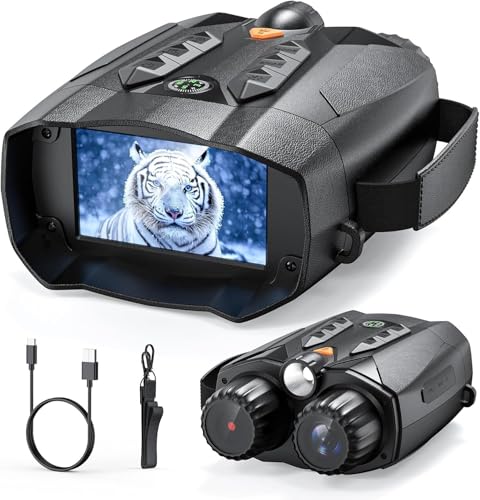
- ARS Mark10.0
ARS Mark is a ranking system developed by bestairriflescopes.com. ARS Mark has no relationship or impact from any manufacturers or sales agent websites. Learn more
- BrandDIGIGOOD

- ARS Mark9.6
ARS Mark is a ranking system developed by bestairriflescopes.com. ARS Mark has no relationship or impact from any manufacturers or sales agent websites. Learn more
- BrandVISIOGEAR

- ARS Mark9.4
ARS Mark is a ranking system developed by bestairriflescopes.com. ARS Mark has no relationship or impact from any manufacturers or sales agent websites. Learn more
- BrandHOTPEAK

- ARS Mark9.2
ARS Mark is a ranking system developed by bestairriflescopes.com. ARS Mark has no relationship or impact from any manufacturers or sales agent websites. Learn more
- BrandLittle Experimenter

- ARS Mark8.8
ARS Mark is a ranking system developed by bestairriflescopes.com. ARS Mark has no relationship or impact from any manufacturers or sales agent websites. Learn more
- BrandJUOIFIP

- ARS Mark8.8
ARS Mark is a ranking system developed by bestairriflescopes.com. ARS Mark has no relationship or impact from any manufacturers or sales agent websites. Learn more
- BrandFREE SOLDIER

- ARS Mark8.6
ARS Mark is a ranking system developed by bestairriflescopes.com. ARS Mark has no relationship or impact from any manufacturers or sales agent websites. Learn more
- Brandvundueh
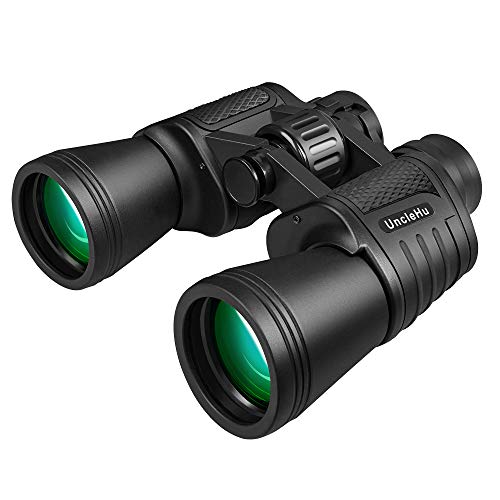
- ARS Mark8.6
ARS Mark is a ranking system developed by bestairriflescopes.com. ARS Mark has no relationship or impact from any manufacturers or sales agent websites. Learn more
- BrandUncleHu
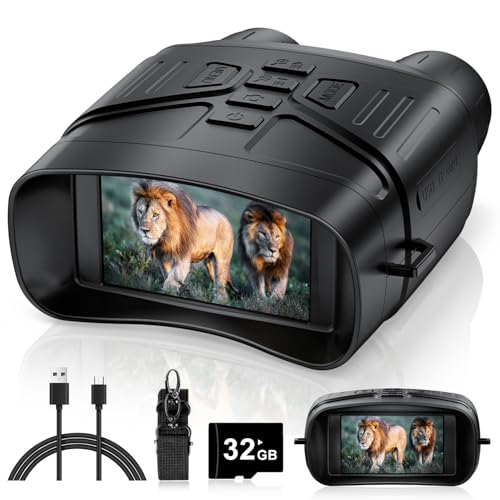
- ARS Mark8.6
ARS Mark is a ranking system developed by bestairriflescopes.com. ARS Mark has no relationship or impact from any manufacturers or sales agent websites. Learn more
- BrandHEXEUM

- ARS Mark8.4
ARS Mark is a ranking system developed by bestairriflescopes.com. ARS Mark has no relationship or impact from any manufacturers or sales agent websites. Learn more
- BrandMildhug
Last update on 2026-09-18 / Affiliate links / Images, Product Titles, and Product Highlights from Amazon Product Advertising API
Why does viewing through two optical barrels improve depth perception over a monocular?
Viewing through two separate optical barrels preserves stereopsis by delivering two distinct angles of an object to your visual cortex. This offset allows your brain to triangulate distance, separate overlapping background elements, and track motion naturally. Optical models equipped with a BAK4 Porro prism system provide up to 99.8% light transmission, feeding balanced visual information to both eyes simultaneously. That dual optical path eliminates the flat, disorienting view typical of monoculars and helps you judge terrain relief across a wide 1,000-yard field of view.
Do digital night vision binoculars provide true binocular 3D vision?
No, most digital night vision binoculars present a flat electronic display rather than two distinct optical angles. Many digital devices process nighttime scenes through a single sensor and output the image onto an internal 3-inch HD screen that both eyes view together. While units equipped with 850nm infrared illuminators and rechargeable batteries like 5000mAh or 7000mAh configurations let you identify targets out to 1,500 feet in complete darkness, the picture on the display screen lacks stereoscopic depth. You gain digital amplification and recording, but you do not get true optical distance estimation.
How do dual eyepieces and diopter adjustments prevent eye strain and double vision?
Dual eyepieces with an independent diopter adjustment ring compensate for strength differences between your eyes to keep both barrels synchronized. If an optic lacks fine diopter calibration, one eye is forced to overcompensate, causing rapid eye strain, disorientation, and double vision. Aligning the central focus wheel alongside a dedicated diopter ring balances the focal plane across large 26mm or 28mm eye lenses. This custom adjustment allows your eyes to relax and merge both incoming images into a single sharp view.
Why is binocular light collection better for low-light tracking than single-eye viewing?
Channeling light to both eyes triggers binocular summation, a neurological process where the brain combines visual signals from both retinas to enhance perceived brightness and contrast. Optics paired with large 50mm objective lenses gather ample ambient light, ensuring that each eye receives adequate illumination at dawn or dusk. When surveying terrain in fading daylight, choosing the best binocular magnification for wildlife viewing helps maintain bright subject contrast and keeps animals distinct from shadowed tree lines.
How do you decide between traditional optical binoculars and digital display binoculars?
Your choice comes down to whether you need natural depth perception for daytime navigation or sensor-driven illumination for total darkness. Traditional glass binoculars maintain accurate depth perception, zero screen latency, and full spatial awareness across open fields. Digital night vision units, which frequently offer 8X to 12X digital zoom and photo capture, serve nighttime security or predator observation where ambient light is absent. For daylight scouting and hiking where genuine optical depth matters most, exploring the best mid range 10x42 binocular picks for 2026 ensures comfortable, fatigue-free viewing without battery dependence.
Can beginners use full-size adult binoculars without visual disorientation?
Beginners can use full-size models comfortably only if the barrel hinge adjusts narrow enough to match their individual eye spacing. Full-size 20x50 binoculars often weigh between 1.6 and 1.76 pounds, which can cause muscle fatigue and hand tremors that disrupt steady visual tracking. Compact alternatives with aluminum alloy bodies weighing around 5.3 ounces, or youth models with flexible rubber eye cups, offer easier handling for smaller hands. To prevent black crescent shadows around the image edges, confirm that the optic folds closely enough to center the exit pupil directly over each eye.


12 Best 22 Pcp Air Rifle For Hunting of 2026 With Quiet Power

7 Best 22 Pcp Air Rifle Under 300 of 2026 For Backyard Pest Control

10 Best 22 Break Barrel Air Rifles of 2026 For Backyard Pest Control

10 Best 30 Caliber Pcp Air Rifle of 2026 For Medium Game

Top Best 177 Air Rifle Under 100: Budget-Friendly Picks for 2026

How to Safely Reload Shotgun Shells at Home

11 Best Co2 Air Rifle For Pest Control of 2026 To Ensure Humane Dispatch

12 Best Inexpensive Air Rifles of 2026 For Dependable Backyard Accuracy






