
What Are the Different Types of Crossbows?

Crossbows come in four distinct styles. Most shooters choose between recurve, compound, reverse-limb, and pistol builds. Simple recurves rely on traditional, curved flexible arms that you can maintain right at home. Modern compound and reverse-draw models add wheel-shaped pulleys to deliver serious arrow speed from a much narrower frame, while handheld pistol designs work strictly for short-range target fun.
The right match depends on where and what you plan to shoot. Chasing deer from a cramped ground blind calls for a slim profile that will not bump into canvas walls. Casual backyard practice needs far less punch. Physical strength also plays a big role, because cocking, which means pulling the bowstring back to lock it, takes real effort without a crank aid. Here is how each design behaves so you can pick the right setup.
Recurve Crossbows Offer Simple Parts and Reliable Backyard Maintenance
A recurve crossbow uses the traditional archery shape that hunters have relied on for generations. Its flexible bow arms curve away from the shooter at the tips, creating a wide, classic arch. A single bowstring hooks directly onto each tip, stretching across the barrel with no wheels, pulleys, or extra cables attached.
The primary advantage of this layout is mechanical simplicity. Because there are no moving wheels or delicate cable tracks, very little can fail during a trip into the woods. If your bow gets rained on or bumped against a tree trunk, there are no synchronized parts that can jump out of alignment.
That simplicity makes maintenance straightforward for beginners. If your bowstring begins to show wear or frays during a hunting trip, you can replace it on your porch using a simple stringing aid. You do not need to drive across town or pay a technician to put your gear inside a heavy archery pro shop bow press, which compound platforms require.
The trade-off comes down to overall width. Because recurves rely entirely on the length of their flexible bow arms to generate speed, they have a wide tip-to-tip span. An uncocked recurve often measures nearly thirty inches across, which can become awkward when you try to walk through thick brush.
That wide frame also creates real headaches inside cramped hunting blinds. If you raise your bow inside a ground blind, the broad limbs can easily scrape against the fabric walls or bump a window frame. The noise can easily spook deer standing thirty yards away.
Cocking effort is another factor to consider. Cocking means pulling the bowstring back until it clicks into the trigger latch. On a recurve, the pull weight, which is the muscular effort needed to draw the string, grows heavier every inch you pull. With no mechanical let-off to reduce that strain, pulling a recurve back requires steady upper-body strength and a reliable cocking aid.
Compound Crossbows Squeeze High Speed Into Narrow Hunting Frames
Compound crossbows solve the width problem by adding wheel-shaped pulleys, called cams, to the tips of their flexible bow arms. These wheels work together with a system of cross-cables beneath the arrow track. This setup transfers stored energy into the arrow far more efficiently than basic curved limbs can alone.
As you pull the bowstring back, those rotating cams create holding weight relief, also known as weight let-off. The pull starts stiff, but the effort noticeably eases up near the end of the stroke right before the string latches. This mechanical assist lets manufacturers use shorter, stiffer bow arms that store massive energy in a small footprint.
Because the flexible bow arms are shorter, compounds feature a narrow wheel-to-wheel length. Some modern designs measure less than twelve inches wide when fully cocked. Choosing a compact hunting setup like the best TenPoint crossbow for hunting gives you plenty of elbow room to shoulder your weapon inside a tight tree stand or a popup tent.
That compact shape delivers blistering arrow speeds with a flat flight path. Faster arrows travel on a flatter line across forty yards, giving you tighter target groups and reducing the guesswork needed when estimating animal distance. However, all that performance relies on tight mechanical tolerances.
Maintenance on a compound is not a do-it-yourself garage project. The cables and string remain under hundreds of pounds of constant tension even when at rest. If a cable frays or your cams fall out of timing, you must take the bow to a professional who has an archery pro shop bow press to compress the limbs safely.
You must also guard against a dry fire, which means firing the bow without an arrow loaded on the flight deck. Without an arrow to absorb the energy, that violent force transfers back into the limbs and wheels. A dry fire can snap cables, bend wheel axles, and shatter flexible bow arms into flying debris, instantly ruining the bow.
Reverse-Draw Crossbows Shift Heavy Weight Toward Your Shoulder
Reverse-draw crossbows, often called reverse-limb models, flip the traditional bow design backward. The flexible bow arms face toward the shooter, and the center riser block mounts near the middle of the frame rather than out at the front nose. This reversed build changes how the weapon balances in your hands.
Standard crossbows tend to feel very front-heavy because the riser, limbs, and cams all sit on the far tip of the barrel. Holding a nose-heavy bow level while waiting for a deer to turn broadside strains your forearm and causes shaky aim. A reverse-draw build pulls all that heavy metal back toward your grip and shoulder, creating a natural center of balance.
This layout also increases the grip-to-string distance, which gives the bow a much longer power stroke. Because the string rests far down the barrel before cocking, it stays in contact with the arrow for a longer push during the shot. That longer travel path creates high arrow speeds without forcing you to use extreme pull weights.
In the field, reverse-limb models become exceptionally narrow once cocked. Reviewing dimensions in a TenPoint TX Ultra 265 vs TX Ultra 295 comparison shows how modern reverse engineering keeps the bow arms snug against the barrel. You can easily turn to take a shot out of a side window in a ground blind without banging your gear.
There are a few quirks to keep in mind with reverse designs. The string angles can be quite sharp when cocked, which puts heavy friction on the center serving string and arrow nocks. You must use the exact nocks and arrow weights specified by the manufacturer to keep the bow firing safely and prevent string slippage.
Pistol Crossbows Are Strictly Built For Short-Range Target Plinking
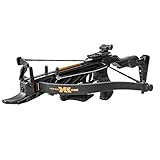
Pistol crossbows are handheld, miniature frames built for target shooting in backyards or basements. Most feature a built-in lever behind the grip, like the self-cocking system on the Bear X Desire XL Self-Cocking Pistol Crossbow with 3 Premium Bolts. You simply pull down the rear lever to draw the string into the latch with minimal effort.
These lightweight platforms fire short plastic or aluminum bolts and are built for casual fun. They are great for shooting paper targets, busting foam blocks, or knocking down empty soda cans from ten to twenty yards away. They are easy to pack in a duffel bag and cost very little to keep running.
Beginners often ask if they can take a pistol crossbow deer hunting. The answer is an absolute no. Pistol crossbows do not produce the arrow speed or cutting energy needed to pass through big game vitals humanely. Attempting to hunt large animals with a pistol crossbow is inhumane and strictly illegal across North America.
State wildlife agencies enforce strict hunting rules that require full-sized equipment. Most local regulations mandate minimum pull weights, often starting at 100 to 125 pounds for crossbow hunting, alongside specific bolt lengths and broadhead cutting widths. Pistol crossbows simply do not meet those legal baselines.
Even though they are small, pistol models still require strict safety checks before every shooting session:
- Always place your target against a thick foam block or dense dirt hill to stop stray bolts cleanly.
- Avoid shooting at plywood boards, bricks, or solid trees, which can shatter small bolts and bounce sharp pieces back toward you.
- Examine your mini bolts for bends or cracked nocks before sliding them onto the rail.
- Keep your fingers flat along the lower handle and well beneath the string track every time you pull the trigger.
Pick Your Crossbow Based on Hunting Space and Physical Strength
Choosing the right crossbow comes down to matching the design with where you plan to shoot and your physical strength. Before spending money, consider the clear differences between tight woods setups and open backyard ranges.
If your hunting plans revolve around small ground blinds or compact ladder stands, prioritize narrow frames. Examining compact designs like the TenPoint TX Ultra 265 crossbow reveals how short wheel-to-wheel widths allow quiet, fluid movement in tight spaces. Compound and reverse-limb designs excel in these tight quarters, while wide recurves can feel bulky and clumsy.
If you prefer simplicity and want to do all your string repairs at home without specialty tools, a recurve is the practical pick. They handle rough weather with ease, making them excellent choices for backcountry hunts where taking a bow to a repair shop is not an option.
Your physical strength should also dictate your cocking choice. While standard rope cocking aids cut the effort required to pull the string in half, they still demand solid lower back and arm strength. If you have joint pain, back issues, or limited mobility, look for models equipped with built-in crank cocking aids. These small mechanical cranks reduce the cocking effort down to just a few pounds of smooth hand turning.
Finally, confirm your local hunting regulations before making a purchase. State wildlife agencies set clear limits on minimum pull weights, minimum arrow lengths, and whether illuminated or magnified optics are permitted during archery season. Checking your state rules first ensures your new bow is fully legal for opening day.
Before every practice session or hunt, make a habit of flex-testing carbon arrows by gently bending each shaft with your hands while listening closely for faint cracking sounds. Catching a damaged arrow or a frayed string before you pull the trigger protects your equipment and keeps you safe on the range.
- ARS Mark8.5
ARS Mark is a ranking system developed by bestairriflescopes.com. ARS Mark has no relationship or impact from any manufacturers or sales agent websites. Learn more
- BrandBear X

- ARS Mark7.5
ARS Mark is a ranking system developed by bestairriflescopes.com. ARS Mark has no relationship or impact from any manufacturers or sales agent websites. Learn more
- BrandKrause Publications
Last update on 2026-10-20 / Affiliate links / Images, Product Titles, and Product Highlights from Amazon Product Advertising API


12 Best 22 Pcp Air Rifle For Hunting of 2026 With Quiet Power

7 Best 22 Pcp Air Rifle Under 300 of 2026 For Backyard Pest Control

10 Best 22 Break Barrel Air Rifles of 2026 For Backyard Pest Control

10 Best 30 Caliber Pcp Air Rifle of 2026 For Medium Game

Top Best 177 Air Rifle Under 100: Budget-Friendly Picks for 2026

How to Safely Reload Shotgun Shells at Home

11 Best Co2 Air Rifle For Pest Control of 2026 To Ensure Humane Dispatch

12 Best Inexpensive Air Rifles of 2026 For Dependable Backyard Accuracy






