
What Is the Quietest Crossbow for Hunting?

No hunting crossbow is completely silent. The quietest setups use reverse-facing limbs and integrated rubber dampeners to soften the violent snap of the release. Crossbows pack immense energy into stiff limbs, so any power left behind turns straight into noise. That sharp mechanical crack often reaches a buck before the arrow arrives, giving game enough time to duck your shot.
Keeping your shot quiet comes down to managing that leftover energy. Shooting heavier hunting arrows forces the bow to transfer more force into flight and less into sound. The shape of the frame also matters, since limbs turned backward toward your shoulder balance recoil better than wide, traditional styles. Rubber bumpers that catch the string soak up the final buzz. Here is what causes crossbow noise and how to quiet your gear in the field.
Trapped Energy And High Pull Weight Cause Crossbow Crack
A crossbow releases a startling amount of noise compared to an ordinary vertical compound bow. A standard vertical bow uses long, flexible arms and a gentle pull weight of 60 to 70 pounds that bends smoothly over a wide draw arc. In contrast, a hunting crossbow compresses 150 to over 200 pounds of pull weight into short, stiff limbs (the flexible arms that bend to store power). When you touch the trigger, that violent burst of energy has to find an immediate exit.
The arrow takes a substantial chunk of that force to fly downrange, but it cannot drink up all of it. Whatever energy remains behind stays trapped inside the frame. This extra force snaps back through the cams, rattles the flight rail, and vibrates down the composite stock. That sudden release of trapped energy creates the sharp metallic crack that carries across quiet woods on a cold morning.
Deer react to that sharp crack because sound travels much faster than your projectile. Sound moves through cool hunting air at roughly 1,125 feet per second. Even if you shoot a high-powered rig flinging arrows at 400 feet per second, the sound wave reaches the animal nearly three times faster than the broadhead. That time gap gives game animals an immediate window to react.
Whitetail deer have an involuntary survival reflex known to hunters as jumping the string. When a loud crack echoes through calm timber, the deer drops its chest toward the ground to load its leg muscles for an escape leap. In less than half a second, the animal can duck 8 to 12 inches lower. An arrow aimed dead-center behind the shoulder then sails harmlessly over the deer or strikes high into the back spine.
Reverse Limbs Spread Out Shock Better Than Forward Limbs
Limb arrangement changes how vibration moves through the bow frame. Traditional crossbows use forward-facing limbs where the flexible arms point out toward the target. When you pull the trigger on a traditional model, the limbs slam forward away from you. This forward snap jerks the front end of the bow, directing all the mechanical noise forward toward your target animal.
Reverse-draw designs mount the riser (the central frame connecting the limbs) much closer to the shooter, with the limbs turned backward toward the shooter. When you fire a reverse-draw setup, the limbs move inward and back toward your center of gravity. This inward stroke naturally cancels out front-heavy kick and distributes the physical shock across the center of the stock. The resulting shot sound is usually a lower, duller thud rather than a harsh crack.
Hunters often ask if a faster arrow makes a crossbow louder. The short answer is yes. Squeezing higher speeds out of short limbs requires heavier pull weights and aggressive wheel designs. That setup packs immense kinetic force into the system, which leaves behind far more unspent energy after the arrow departs.
A setup shooting at a moderate 360 feet per second usually sounds noticeably quieter than an identical frame pushed past 420 feet per second. The slower setup produces less internal stress and creates a softer acoustic signature that deer do not interpret as immediate danger. When hunters look at comparing compact hunting designs for ground blinds, they often notice that balanced, moderate-speed setups offer a calmer shot cycle in close quarters.
Heavier Carbon Arrows Absorb Excess Vibration Before Release
Shooting a heavier arrow is the single most effective way to quiet an existing hunting setup. Think of your carbon arrow as an energy sponge. A light arrow leaves the rail quickly, but its low mass cannot soak up all the power generated by heavy limbs. The unabsorbed energy stays behind in the bow, escaping as loud string crack and limb hum.
When you increase your total arrow weight by switching to a heavier shaft or adding a brass insert up front, the arrow soaks up significantly more kinetic energy before it leaves the track. The heavier arrow stays on the flight rail for just a tiny fraction of a second longer. That extra contact time transfers the raw energy into arrow momentum instead of airborne sound waves.
You do trade a small amount of arrow speed when moving to a heavier shaft, but the trade-off favors the hunter. Swapping from a light 370-grain bolt to a sturdy 425-grain arrow might cost you 15 to 20 feet per second at the muzzle. However, at normal whitetail distances of 20 to 35 yards, that small speed difference does not change your point of aim significantly.
The heavier shaft also punches through hide and bone with substantially more downrange momentum. Before heading to the woods, always remember flex-testing carbon arrows (bending the arrow gently by hand to listen for cracking sounds before shooting). Also, check your bow manual to ensure your finished arrow never falls below the manufacturer minimum weight limit. Shooting an arrow that is too light acts like a partial dry-fire (shooting without an arrow loaded), which can shatter limbs and cause serious injury.
Rubber Bumpers And Limb Pads Cut Down String Clatter
You can easily reduce shot noise on your current hunting bow by adding soft rubber dampening parts. String suppressors (rubber bumpers that catch the moving string) are the most critical add-on. As the string reaches the end of its power stroke, it tends to oscillate violently back and forth in empty air. A well-adjusted pair of rubber bumpers catches the string immediately, stopping that harsh buzz dead in its tracks.
Limb pads provide another layer of sound control. These dense rubber wedges or mushroom-shaped silencers attach between split limbs or stick directly onto solid limbs. They deaden the high-frequency ringing that travels through the fiberglass after each shot. Adding these small rubber pieces softens the sharp audio spike that alerts deer in quiet woods.
Small hardware pieces on your bow can also create unexpected noise that spooks nearby game. The bolt retention arm (the metal spring or nylon finger that presses the arrow down into the track) can vibrate like a tuning fork upon release. Sliding a soft rubber sleeve over a metal retention arm stops that metallic hum instantly. Checking and dampening this small part makes a noticeable difference.
Vibration also loosens screws over the course of an archery season. A loose quiver mount, a rattling scope base, or an unpadded cocking stirrup will turn an otherwise quiet shot into a loud metallic clatter. Tighten every mounting screw by hand with a standard hex key before opening day, and pad the foot stirrup with camo wrap or rubber tape.
Never clamp your crossbow limbs in standard bench vises or try to install string accessories with home workshop tools. Crossbow limbs hold hundreds of pounds of pressure, so any cable work requires a heavy-duty archery pro shop bow press operated by a qualified technician. Exploring hunting models with built-in safe de-cocking and dampening shows how modern designs build these quiet, safe features directly into the frame without requiring aftermarket alterations.
Look For Built-In Suppressors And Moderate Speed Ratings
When you evaluate hunting crossbows specifically for sound control, focus on how well the hardware manages vibration straight from the box. Look for models engineered with integrated string suppressors that align squarely with the bowstring. Factory-installed stops are usually tuned to the exact travel path of the string, preventing the harsh slap that warns deer of an incoming arrow.
Examine the limb design and the overall wheel-to-wheel length (the distance from axle to axle across the limbs). Extremely narrow setups with high pull weights squeeze incredible energy into compact spaces, but they often produce a sharper report on release. A slightly wider, well-balanced limb configuration running at moderate hunting speeds tends to release energy with a softer, muffled sound that blends easily into natural background woods noise.
Check the arrow retention setup and trigger housing before making your choice. Models that use synthetic retention brushes rather than bare metal tension springs eliminate a common source of shot buzzing. Look for trigger assemblies that break cleanly without hollow metallic clicks or internal creaks as you apply finger pressure while aiming.
Finally, confirm that the manufacturer offers accessible replacement dampeners for their hardware. Rubber bumpers and limb silencers naturally harden and wear out over years of outdoor weather and repeated shooting shock. Choosing a bow built with easily replaceable dampening pads ensures you can maintain quiet hunting performance season after season.

- ARS Mark9.3
ARS Mark is a ranking system developed by bestairriflescopes.com. ARS Mark has no relationship or impact from any manufacturers or sales agent websites. Learn more
- BrandKiller Instinct

- ARS Mark8.9
ARS Mark is a ranking system developed by bestairriflescopes.com. ARS Mark has no relationship or impact from any manufacturers or sales agent websites. Learn more
- BrandRAVIN
- ARS Mark8.6
ARS Mark is a ranking system developed by bestairriflescopes.com. ARS Mark has no relationship or impact from any manufacturers or sales agent websites. Learn more
- BrandBARNETT

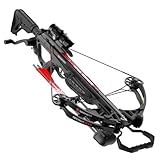
Killer Instinct BOSS 405 Camo Crossbow - 405 FPS Compact Hunting Package with Micro‑Lite
View on Amazon- ARS Mark8.5
ARS Mark is a ranking system developed by bestairriflescopes.com. ARS Mark has no relationship or impact from any manufacturers or sales agent websites. Learn more
- BrandKiller Instinct
Last update on 2026-10-19 / Affiliate links / Images, Product Titles, and Product Highlights from Amazon Product Advertising API


12 Best 22 Pcp Air Rifle For Hunting of 2026 With Quiet Power

7 Best 22 Pcp Air Rifle Under 300 of 2026 For Backyard Pest Control

10 Best 22 Break Barrel Air Rifles of 2026 For Backyard Pest Control

10 Best 30 Caliber Pcp Air Rifle of 2026 For Medium Game

Top Best 177 Air Rifle Under 100: Budget-Friendly Picks for 2026

How to Safely Reload Shotgun Shells at Home

11 Best Co2 Air Rifle For Pest Control of 2026 To Ensure Humane Dispatch

12 Best Inexpensive Air Rifles of 2026 For Dependable Backyard Accuracy






