
What Is the Fastest Crossbow in 2026?

A shooter standing at an archery range watches an arrow bury itself deep into a thick foam target, wondering just how fast modern gear can actually launch it. Today, the fastest production models reach advertised speeds of 460 to 505 feet per second. That velocity creates remarkably flat flight paths, giving a deer almost no time to flinch before the arrow arrives.
That printed rating is rarely what flies in the woods. Makers achieve top numbers using ultra-light test arrows, but heavier hunting setups drop your true arrow speed by thirty feet per second or more. Pushing that much energy also strains the bowstrings, shreds practice targets, and usually requires a mechanical crank just to pull the string back safely. Knowing how arrow weight and extra wear balance against raw velocity helps you decide if chasing maximum speed makes practical sense.
How Fast Do Modern Crossbows Actually Shoot?
Top production crossbows reach advertised speeds between 460 and 505 feet per second. Feet per second (abbreviated as FPS) measures how many feet an arrow travels in one second of flight. A decade ago, exceeding 350 feet per second was exceptional for a hunting bow. Modern engineering has pushed standard benchmarks far beyond that mark.
Production models from major brands demonstrate these numbers. High-performance models like the TenPoint TX Ultra 29.5 carry manufacturer ratings of 460 feet per second. Meanwhile, all-around hunting options like the TenPoint Turbo X reach speeds around 415 feet per second. A small handful of specialized flagship designs reach up to 505 feet per second under specific factory conditions.
Achieving these velocities requires aggressive bow architecture. Manufacturers utilize rigid reverse-draw limbs or forward-draw configurations paired with oversized cams. These designs store massive kinetic energy within shorter power strokes. The wheel-to-wheel length (the distance measured from the axle of one cam to the other) has shrunk considerably, often measuring under eight inches when fully cocked. Storing that much force inside a compact frame produces blazing arrow flight, but the speed on the box does not always match what hunters experience in the woods.
Why Is Real Arrow Speed Slower Than the Box?
The speed stamped on retail packaging is rarely the exact velocity you achieve on a hunt. Crossbow manufacturers measure advertised speeds using the lightest arrow the bow can safely shoot without voiding its warranty. Arrow mass is measured in grains, an archery weight unit where 7,000 grains equal one pound.
Factory speed ratings frequently rely on lightweight arrows that weigh around 370 to 400 grains, complete with light practice points. When preparing for hunting season, shooters build heavier setups. A practical hunting bolt carries a 100-grain or 125-grain steel broadhead, brass inserts for forward balance, heavy vanes, and often a lighted nock to track arrow flight. These components push total arrow weight to 420, 450, or even 500 grains.
Every additional grain of weight reduces arrow speed. As a general rule of thumb, adding five grains of arrow weight reduces flight speed by roughly one foot per second. If a bow is rated at 460 feet per second with a 400-grain arrow, shooting a 450-grain hunting bolt brings real-world velocity down to roughly 450 feet per second.
This speed drop is actually beneficial for ethical hunting. Heavier arrows absorb more energy from the limbs, dampening shot noise and reducing stress on the frame. Heavier arrows also retain superior momentum downrange, helping the broadhead drive cleanly through bone and hide.
What Are the Hidden Costs of Extreme Speed?
Shooting an arrow at 450 feet per second or faster introduces mechanical challenges that moderate setups avoid. Before chasing top speed, consider the practical trade-offs:
- Rapid serving wear: The center serving (the tightly wrapped protective cord shielding the bowstring where it catches the trigger latch) handles extreme friction under heavy loads. High-velocity bows wear through this protective wrap quickly, requiring frequent inspection and regular waxing.
- Severe target destruction: Standard foam backyard targets cannot stop arrows traveling faster than 420 feet per second. High-velocity bolts often sink up to the fletchings or punch straight through, damaging vanes. Friction can also melt foam onto carbon shafts, making arrows hard to pull out.
- Arrow structural stress: Extreme acceleration exerts severe bending force on the carbon shaft as it leaves the flight deck. Shooters must practice flex-checking carbon arrows (bending each arrow gently by hand to listen for cracking sounds) before every shot to prevent shooting a damaged shaft.
- Louder shot noise: Accelerating heavy cams at rapid speeds generates sudden vibration. Even with rubber limb dampeners, high-velocity crossbows tend to produce a louder snap upon firing than slower, more relaxed designs.
- Catastrophic dry fire danger: A dry fire happens when a crossbow discharges without an arrow loaded. Because an arrow absorbs the bow energy, releasing that force into an empty flight deck can shatter limbs, crack cams, and throw sharp fragments. The enormous energy stored in an ultra-fast crossbow makes a dry fire almost universally destructive.
How Do You Safely Cock Such Powerful Bows?
Reaching speeds above 400 feet per second requires high pull weight. Pull weight refers to the muscular effort, measured in pounds, needed to pull the bowstring back to the trigger latch. Ultra-fast crossbows often feature pull weights between 250 and 300 pounds.
Drawing a 300-pound string by hand is impossible for most people, and traditional rope cocking aids place dangerous strain on your fingers, wrists, and back. If a manual rope slips while pulling against 250 pounds of pressure, the string can snap forward violently, causing severe injury or wrecking the limbs.
Modern high-velocity platforms solve this challenge by integrating mechanical crank handles. These crank mechanisms use internal gear reduction to convert a 300-pound draw into just five to twelve pounds of smooth cranking effort. You simply turn the handle until the trigger latch catches the string with an audible click.
Safe decocking is equally vital. Decocking means releasing the tension in the bowstring without shooting an arrow. On older designs, you had to shoot a practice bolt into a portable target or soft ground to unload after hunting. Modern platforms include controlled decocking systems that allow you to unwind the crank handle smoothly while the bowstring returns forward. If you want a setup that avoids carrying discharge targets into elevated stands, choosing a crossbow with safe de-cocking features keeps your routine simple and safe.
What Arrow Speed Do You Actually Need for Hunting?
Speed ratings are appealing, but you do not need 480 feet per second to harvest big game cleanly. Understanding how different speed brackets perform in the field helps you choose the right balance for your hunting style:
350 to 380 Feet Per Second: This bracket is the proven standard for hunting whitetail deer. Bows in this range are quiet, easy to cock with basic aids, and gentle on strings and cables. They generate plenty of kinetic energy to pass through deer within 40 yards. Strings last longer, and standard backyard foam targets stop arrows without difficulty.
390 to 420 Feet Per Second: This range represents the practical sweet spot for most hunters today. It provides a flat trajectory out to 40 or 50 yards, which forgives minor errors in estimating distance. The arrow reaches the animal fast enough to minimize the risk of a deer ducking under the shot. Gear wear remains manageable, and cocking mechanisms operate with minimal strain.
430 to 500+ Feet Per Second: These ultra-fast systems are tailored for shooters who value long-range precision and exceptionally flat trajectories. An arrow moving at 460 feet per second requires very little vertical adjustment between 20 and 40 yards. But you trade away string longevity, target convenience, and quiet shooting. Unless you hunt wide-open terrain where longer shots are common, the practical advantage over a 400 FPS bow is relatively small.
Hunters should also balance arrow speed against physical bow dimensions. A slightly slower bow with a narrower wheel-to-wheel length often handles much better in brushy cover or elevated tree stands. When evaluating compact crossbow dimensions, overall maneuverability and steady aiming often make a bigger difference in hunting success than chasing extra velocity.
What Should You Look for in a High-Speed Crossbow?
If you decide that high arrow speed fits your hunting needs, focus on construction quality and safety mechanisms rather than raw numbers alone. High arrow velocities place intense physical force on every component, so the bow must have hardware capable of handling that pressure over time.
Look for a bow with a built-in mechanical crank featuring an anti-reverse safety clutch. This clutch prevents the crank handle from free-spinning backward if your hand slips off, protecting your fingers from injury. Built-in decocking functionality is just as essential, allowing you to relax string tension silently at the end of the day without discharging a bolt.
Check the flight rail and trigger assembly carefully. High string tension creates significant downward friction against the barrel, so a precision-machined aluminum flight rail is vital for consistent arrow flight and reduced serving wear. The trigger latch should grip and release the bowstring smoothly without fraying the protective serving wrap.
Finally, confirm that your local archery pro shop has a dedicated compound bow press designed to handle high-poundage crossbows. High-velocity crossbow strings and cables sit under immense mechanical pressure and must never be clamped with regular workshop tools. Access to a qualified professional ensures your bow stays properly timed, safe, and ready for every season.
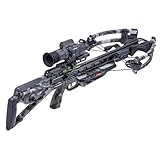
- ARS Mark9.5
ARS Mark is a ranking system developed by bestairriflescopes.com. ARS Mark has no relationship or impact from any manufacturers or sales agent websites. Learn more
- BrandTenPoint
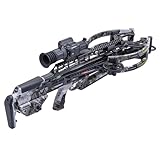
- ARS Mark8.9
ARS Mark is a ranking system developed by bestairriflescopes.com. ARS Mark has no relationship or impact from any manufacturers or sales agent websites. Learn more
- BrandTenPoint

- ARS Mark8.4
ARS Mark is a ranking system developed by bestairriflescopes.com. ARS Mark has no relationship or impact from any manufacturers or sales agent websites. Learn more
- BrandTenPoint
Last update on 2026-10-20 / Affiliate links / Images, Product Titles, and Product Highlights from Amazon Product Advertising API
FAQs
Does a faster crossbow shoot flatter at long range?
Yes, higher arrow speed creates a noticeably flatter flight path. A bolt launched at 450 feet per second drops far less over 40 to 50 yards than a bolt traveling at 350 feet per second. This flatter trajectory gives you a wider margin of error if your yardage estimate is off by a few yards.
Will high arrow velocity ruin standard backyard targets?
Standard foam targets built for moderate compound bows quickly break down when hit by arrows traveling over 420 feet per second. High-speed bolts often penetrate past the fletchings or blow completely through the back of the target. You must use high-density targets rated for 450 to 500 FPS to stop arrows safely and avoid melting foam onto carbon shafts.
How often do strings need replacing on fast crossbows?
High-velocity models put substantial friction on strings and cables, requiring more frequent maintenance. Most manufacturers recommend replacing strings and cables every two years or every 200 to 400 shots, whichever occurs first. Keeping the flight rail clean and applying string wax regularly helps protect the serving wrap between replacements.
Can you cock a 450 FPS crossbow with a rope?
Crossbows that launch arrows at 450 feet per second or higher cannot be drawn safely with a standard rope cocking aid. Their pull weights are far too heavy, creating high risk of muscle strain or accidental slippage. These high-performance bows require an integrated mechanical crank to draw the string safely into the trigger latch.


12 Best 22 Pcp Air Rifle For Hunting of 2026 With Quiet Power

7 Best 22 Pcp Air Rifle Under 300 of 2026 For Backyard Pest Control

10 Best 22 Break Barrel Air Rifles of 2026 For Backyard Pest Control

10 Best 30 Caliber Pcp Air Rifle of 2026 For Medium Game

Top Best 177 Air Rifle Under 100: Budget-Friendly Picks for 2026

How to Safely Reload Shotgun Shells at Home

11 Best Co2 Air Rifle For Pest Control of 2026 To Ensure Humane Dispatch

12 Best Inexpensive Air Rifles of 2026 For Dependable Backyard Accuracy






