
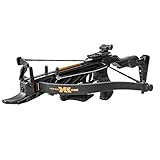
Most hunting crossbow bolts fly 300 to 400 feet per second, or 205 to 272 mph. Real setups fly slower than the box says, but heavier bolts hit harder.
Freezing weather makes arrows hit low downrange, while extreme heat can warp limbs. Keep your shots accurate and protect your bow in cold woods or hot cars.
Stop wandering shots and tighten your arrow groups by centering the string evenly, matching tip weights, and using a solid rest before squeezing the trigger.
Sudden moves blow your cover before you take aim. Use fluid, planned footwork, broken outlines, and smart timing to slip into crossbow range undetected.
Firing without an arrow and resting fingers near the string can shatter limbs or cause severe hand injury. Keep your bow intact and shoot safely every time.

Mount your quiver underneath parallel to the stock to prevent brush snags, or use a top bracket above the scope if you need clearance on shooting rests.
Yes, you can convert most crossbows for fishing with a reel mount. Use solid fiberglass bolts with safety line slides to prevent dangerous arrow snapback.
Balance your bolt on a straight edge and use simple math to calculate front weight percentage. Stop wild broadhead flight so every hunting shot steers true.
Cock your Ravin R26 with the crank handle, check the safety, and push the arrow until the nock snaps securely onto the string to prevent costly dry fires.
Step into the stirrup, hook your rope cocker evenly, and lift with your legs until the latch clicks. Protect your fingers and ensure straight arrow flight.

Most hunters need 400 to 450 total grains, including the broadhead. Balance arrow speed with deep penetration while keeping your crossbow limbs safe.
Crossbow frames typically last 5 to 15 years, while strings last 1 to 3 years. Routine care and checking for limb cracks keep an older bow safe to shoot.
Silence string slap with rubber dampeners, brighten low-light crosshairs, and match arrow weights to keep your crossbow balanced, steady, and accurate.
Crossbows are not long-range rifles. Steep arrow drop and shot noise keep clean hunting shots inside 40 yards. Separate woods fact from campfire rumors.
Several modern militaries still issue crossbows for silent jobs like clearing tripwires and launching lines, but never as primary frontline weapons.
Crossbows are too bulky for hallways, cannot be kept loaded safely, and leave you defenseless after one shot. Here is why hunting gear fails indoors.
Crossbow hunting helped everyday people put food on the table for centuries. Today, it keeps deer camp traditions alive for older and youth hunters.
A crossbow offers quiet stopping power with fewer legal restrictions, but slow reloads and wide limbs make it risky to handle in narrow indoor hallways.
Stop arm shakes while aiming and cock your crossbow without lower back pain. Simple home drills build the leg, shoulder, and core strength you need this fall.
Deer hunting usually requires 150 to 200 pounds of pull. Balance local legal minimums with a cocking aid you can pull comfortably in a tree stand.










