
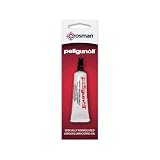
Household lubricants dissolve rubber airgun seals. Use pure silicone oil and place one or two drops on CO2 tips, pump arms, or spring hinges to stop leaks.

Johann Nikolaus von Dreyse built the first bolt action rifle in 1836. Settle the historical timeline, see how it worked, and why modern air rifles still use it.
Regular buyers cannot ship an airgun into India. Only certified target shooters qualify with permits. Verify the paperwork needed to avoid customs seizure.
Walter Hunt patented the first lever design in 1848, but the 1860 Henry rifle was the first working repeater. Follow how early models led to Winchester.
Walter Hunt patented the mechanism in 1849, but Benjamin Tyler Henry made it practical in 1860. Here is why history books name several different inventors.
Remove the gas and ammo first, then gently push the stuck BB out with a soft clearing rod. Avoid follow-up shots or stiff wire that scratch the barrel.
Restore pellet accuracy without ruining your barrel. Pull soft patches from the loading end, skip harsh firearm solvents, and protect delicate rubber seals.
Most break-barrel air rifles can hit a quarter at 25 yards. Gripping the stock tightly throws shots wide, while a relaxed palm hold tightens your groups fast.
Yes, airguns can kill. Fast pellets can easily penetrate skin, eyes, or bone, which is why every air rifle must be handled like a loaded firearm.

Pellet guns can cleanly kill pest birds, but round BBs usually just wound them. Check the required power, accurate shot placement, and wildlife laws first.
Yes, BB and pellet guns can shatter house and car windows. Hard steel BBs and lead pellets damage glass differently, but safe backstops prevent costly breaks.
Steel BB guns cannot kill a raccoon and will only wound it. A humane kill requires a high-power .22 caliber pellet rifle, exact aim, or a safe live trap.
Redfield safes keep kids out and stop quick grab-and-run theft, but thinner steel and basic fire ratings mean understanding their real limits before buying.
Handmade repeaters date to around 1630 and military air rifles arrived in 1780, but practical mass-produced gunpowder models did not appear until 1860.
Most pump air guns take 3 to 10 pumps per shot. Pumping past 10 will not add power and risks blowing out internal rubber seals or jamming the valve.
Pellets shoot most accurately between 800 and 900 feet per second. Speeds above 1,000 cause wild wobbles, but heavier pellets quickly restore tight groups.
The first repeating rifles appeared in the 1630s, followed by 1779 military air rifles and 1860 cartridge models. Settle the timeline behind multi-shot arms.
Early repeating rifles date back to 1630s flintlocks and a 1779 military air gun, long before famous 1860s lever-action cartridge rifles hit the battlefield.
Walter Hunt patented the first lever action in 1848, but Benjamin Tyler Henry made it reliable before Oliver Winchester ever put his name on it.
Walter Hunt patented the first lever action in 1848, but Benjamin Tyler Henry made it reliable in 1860. The design succeeded years before Winchester took over.










