

Tritium sights use self-glowing gas vials to light your aim in total darkness without batteries. They are completely safe to carry and glow for over a decade.

Night sights use glowing dots to help you align your aim in the dark without batteries, but they will not light up your target or replace a flashlight.

An ACOG is a fixed-power prism scope lit by daylight and glowing material instead of batteries, giving you magnified aim where a standard red dot falls short.

A prism sight uses etched glass instead of a standard red dot. It stays sharp for eyes with astigmatism and keeps working even if your battery dies.

A telescopic sight is just the formal term for a rifle scope. See how its lenses bring targets into focus and whether you need zoom or a simple red dot sight.
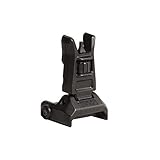
A gas block front sight mounts directly over the barrel. It must be metal to survive intense heat, with the exact height needed to align and zero properly.

Back up sights are manual iron posts that let you aim if your red dot loses power or cracks. See how they work through optic glass and when you need a set.
A canted sight sits at an angle beside your rifle scope so you can tilt the gun for close-range shots. Check how aiming works and whether you need one.

A diopter sight is an iron sight that sharpens your target view through a tiny rear peephole without glass. See how it works and why it differs from a red dot.
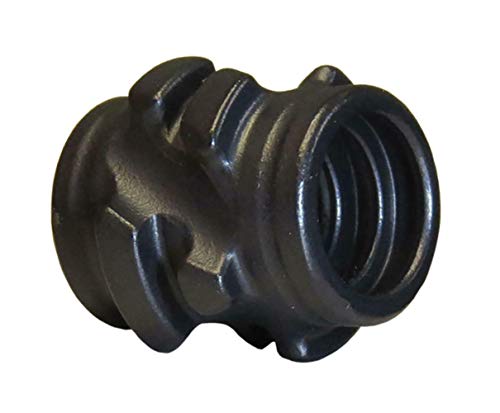
A peep sight is a small rear ring that centers your eye to prevent stray misses. It steadies aim on bows and rifles while balancing light against precision.

A ghost ring sight uses a wide rear opening that blurs as you aim, letting your eye center the front post naturally. See how it works and when to use one.
A rear sight sits closest to your eye to center the front post on target. See how notch and peep styles work, fix off-center hits, and pair with a red dot.

Iron sights are physical aiming tools that need no batteries. See how to align the front post and rear notch, and how to use them as reliable red dot backups.

A collimator sight uses curved glass to project an aiming dot that stays on target. Understand how it works and why common red dots are the same tool.

An RMR is a compact red dot sight and a standard mounting screw pattern. See how the optic shape and slide cut work together to verify pistol fit.

A holographic sight uses a laser to float an aiming reticle on your target. It handles astigmatism better than a red dot and helps you spot cheap LED clones.

A reflex sight reflects an aiming dot off curved glass so you can shoot with both eyes open. Open windows give wide views, while enclosed tubes block debris.

A red dot sight bounces a lit dot off glass to create a fast aiming point. Aim with both eyes open without projecting a laser beam or lining up iron sights.

Turn the top screw to adjust height and the side screw for left or right aim. Use gentle quarter-turns to zero your dot without stripping the fragile threads.

Adjust and zero your laser sight safely. Locate the two adjustment screws, make gentle turns to shift the beam, and avoid stripping delicate internal threads.










